

🫨 Is Spain's economy starting to wobble?
Plus: The party's over for The Party's Over, and Ryanair gives Spain the finger...again.


Madrid | Issue #145
🇪🇸 The Bubble is Spain's #1 English-language, best-selling newsletter. We offer paid subscriptions, and we’d be thrilled to have your support!
🚨 Customize your subscription! You can personalize your Bubble experience so you only get the emails you want—and never the ones you don’t. Click here to learn how.
📺 Sponsorship opportunities. Want to get your brand in front of our engaged and influential audience of professionals, creatives, and government workers? We’re now offering a variety of ways to do so. Click here to find out how and book a spot.
Party pooper
😥 The economy fiesta might be coming to an end

The economy of Spain in general and Madrid in particular has been “killing it” (technical term) in recent years, as we’ve noted again and again. It’s been leading the big EU countries and, seriously, everyone is moving here (like, even Walton Goggins 🥳).
But now it looks like there may be clouds on the horizon. Or flies in the ointment. Or ketchup on the tortilla. And we’re beginning to worry that we — and the PSOE-led government that rules us — may be facing a paradigm shift. Let us count the ways.
Three letters: GDP. Spain’s economy has boomed since the COVID pandemic, buoyed by tourism and EU funds, but the air is bleeding out of that balloon. After outpacing the EU’s biggest economies with 2.8% growth last year, it was already expected to slow to 2.2% this year and 2.0% in 2027. Then the Orange Menace started to bomb Iran, f’ing up those growth projections by sending oil prices up ⏫.
The problem with rising fuel prices? Economy Minister Carlos Cuerpo (a.k.a. Carl Body) says inflation will shoot up to 3.1% (previous expectation: 2.1%), and when things are expensive, people buy less. Even so, Cuerpo is still claiming that 2.2% growth is on for this year despite the fact that the IMF cut its own projection to 2.0% (and 1.7% for 2027). But he admitted that if this war continues, they could cut the number by up to 0.8 percentage points (that would be to 1.4%, for those who don’t like math).
Getting a J-O-B isn’t as easy as it used to be. Employment numbers always sag after the holiday rush, but this year’s drop was crazy bad. The unemployment rate — which briefly dropped below Spain’s (embarrassing) 10% “good news” line at the end of 2025 — shot up to 10.8% in the first quarter with 231,500 new unemployed people, the biggest jump in that time period since 2013 (not including COVID, natch).
Not great timing. The jump slump arrived just as the government is regularizing a guestimated 500,000 undocumented immigrants — a group that is especially exposed to the shop, restaurant, and domestic jobs that were lost. From exploitation to unemployment…
Finding a place to live? Also (even) harder. If you thought it was hard to find an affordable place to live, well, you might soon be nostalgic for the current situation. The average price per m2 of a home in Spain was 14.3% higher in early 2026 compared to a year earlier (in Madrid and Valencia, it was worse: up 19%). Nuts.
You may not be able to find a place to rent either. The Housing Law of 2023, which allows regional governments to cap rent in “stressed” areas in order to make housing more affordable and accessible, appears to be having the exact opposite effect.
Less, not more. In Barcelona, which the Catalan government declared “stressed” in March 2024, the number of long-term rentals on offer fell from 132,259 to 79,456 — about 40% — between 2023 and 2026 as landlords took properties off the long-term market and converted them into short-term rentals, according to Observatorio del Alquiler, a think tank. (Fotocasa says more than a third of landlords plan to get out of the long-term market when their current rental contract is done.)
The real problem? Friend-of-The-Bubble (FOTB) Kiko Llaneras of El País has a fascinating deep dive into Spain’s economic state this week. Tl;dr? The average Spanish salary, taking inflation into account, has only risen 5% in the last 30 years — and because of constant tax increases, has actually fallen since 2015.
Add in housing, and 💥. Take stagnant wages, rising taxes, and housing prices that have risen on average 47.7% since 2015 (and 95.6% in Madrid and Barcelona), according to Caixabank Research, and are you at all surprised that broke youth living with their parents seemingly forever are unhappy — and getting angrier (and moving to the right)?
More news below. 👇👇
💬 Five things to discuss at dinner parties
1. 🇪🇸 Vox’s ‘national priority’ comes to life
Going national. Remember that whole “national priority” thing that sounded like a new discriminatory far-right talking point last week? Yeah, it’s now everywhere.
Going big. What started as a chapter in regional deals between the center-right PP and far-right Vox in places like Extremadura and Aragón has officially taken over Spanish politics. Vox is pushing it hard across regional parliaments (and even town halls), and making it very clear that this is not a suggestion, it’s the line.
More than a slogan. “Prioridad nacional” means giving preferential access to public aid, housing, and services to people with stronger ties to Spain, which, in practice, critics say opens the door to discrimination against immigrants and creates a two-tier system.
Come at us, bro. Vox, for its part, isn’t backing down. The party has warned the PP it won’t accept any attempt to “water down” the concept with softer language about “arraigo” (attachment) or legal nuance.
The real deal. Internally, Vox sees “national priority” as a simple, emotionally charged idea that resonates broadly among working-class voters. Their strategy now is to force the PP to fully embrace it or publicly reject it.
Under pressure. In Aragón, regional president Jorge Azcón defended the measure during his investiture, insisting it’s “legal” (just in case) and based on rewarding those with long-term ties to the region.
Everywhere! Vox is pushing similar proposals in Valencia and also warns they’ll ask for it in Andalucía if the PP needs their votes to govern there.
Quick backlash. PM Sánchez says this is about creating “first and second-class citizens” and has warned the government will step in if any measure crosses legal lines.
Church, too. The secretary general of the Spanish Catholic bishops’ group has also rejected the idea.
Can’t stop, won’t stop. Vox, unsurprisingly, is emboldened by all of this. Party leader Santiago Abascal lashed out at Sánchez — calling him, among other things, “a piece of shit” during a rally.
Hitting the church. He also lashed out at bishops who criticized his policies, accusing them of hypocrisy and siding with what he calls a system that “betrays Spaniards.”
Playin’ it cool. The center-right PP is trying not to alienate moderate voters while they face constant pressure from Vox to go further.
That balancing act might actually be working. According to a poll conducted by the PP, a surprisingly large chunk of socialist voters (around 40%) are receptive to the PP’s softer version of the idea.
Assuming the PP's polling isn't just telling them what they want to hear, this may explain why they aren't slamming the brakes.
2.🐿️ The party might really be over for Alvise Pérez
Speaking about fiestas that are coming to an end, remember Alvise Pérez? The Telegram firebrand who, in 2024, shocked Spain by winning 3 European Parliament seats for his catchily-named party Se acabó la fiesta (”The Party’s Over,” or SALF) — riding 800,000 votes harvested from a brew of far-right messaging, anti-establishment grievance, conspiracy theories, and selectively-deployed online “exposés.”
Well, his party may indeed be over.
Stripped. The European Parliament has officially stripped him of immunity, clearing the way for Spain’s Supreme Court to put him on trial over the alleged harassment of a Valencia prosecutor. The MEP shield doesn’t apply here because what he’s accused of has nothing to do with his job as a legislator.
A mess from day one. Since arriving in Brussels, Alvise’s tenure has been an unbroken parade of public feuds with his own party members and constant controversy — culminating now in legal trouble back home.
The case. Prosecutors call it a targeted harassment campaign. In early 2024, Alvise posted messages and photos of a Valencia prosecutor on his Telegram channel, accusing her of persecuting Spaniards.
The result: around 1,500 abusive messages from his followers, including threats and calls to harass her IRL. The Supreme Court believes there may have been a deliberate attempt to mobilize his audience against her.
Not the only one! This is one of five open legal investigations.
The greatest hits. Illegal campaign financing — a €100,000 payment from a crypto
bro“businessman” Alvise has openly acknowledged receiving; spreading a fake COVID test about a high-profile politician, admitted in court; allegedly harassing his own former SALF colleagues; and a separate Supreme Court probe into alleged threats against the mayor of Algeciras.
What now? With immunity gone, the Supreme Court can finally proceed with the first trial — and potentially others, depending on whether further immunity requests are lifted. None of this means he’s guilty. But the heat shield is off.
Witch hunt! Alvise has already framed it all as part of a “corrupt system” targeting him — a narrative that plays well with his base. (Sounds familiar?)
Make Spain great again. Fret not, anti-establishment readers: he’s already announced he’s running in the 2027 general election.
3. 🌑 A year ago, all the lights went out — and we still don’t know who to blame
On April 28, 2025, a historic blackout plunged Spain into darkness, unleashing societal collapse of a profundity never seen outside of The Last of Us 🧟. Widespread looting, radioactive panthers, zombie hordes, paella made with chorizo…it was madness.
Actually, none of that happened. Some 35,000 people were stranded in trains, and a team of window cleaners got stuck on one of Madrid’s
CuatroCinco Torres skyscrapers. But at least judging from The Bubble’s “on the ground reporting” at the time, a big chunk of Spain’s population took it upon themselves to rescue warming beer and dance the Macarena (literally).
But it was a big f-up that cost us all a 💩-ton of 💰 — and a year on, no one’s saying whose fault it was.
The reports. Four official investigations and one parliamentary inquiry have produced an impressive paper trail and exactly zero resignations. Beatriz Corredor, the former PSOE Housing Minister who Sánchez’s government appointed chair of partially state-owned grid operator Red Eléctrica — a €546k-a-year job — is still there. Energy Secretary Sara Aagesen still has her job. Sánchez himself has very pointedly not apologized.
What happened (allegedly). The technical consensus — to the extent there is one — points to a voltage surge cascading through a grid running on 55.5% renewables, causing every energy producer to go offline lest they suffer damage.
Green fail? Not quite. The cause, experts say, wasn’t “excessive” renewables but a grid increasingly reliant on them and not yet fully adapted — meaning, in plain terms, more batteries and more gas/nuclear backup to absorb sudden clouds or a drop in the breeze. Spain has been early out of the gate on this; it’s uncharted ground.
The blame game. Red Eléctrica blames the utilities. The utilities blame Red Eléctrica. Iberdrola is suing. The Senate’s PP-majority report demanded dismissals — Corredor’s, Aagesen’s, the lot — which the government received with the seriousness it reserves for things it intends to ignore. Feijóo, predictably, called for resignations. Sánchez, equally predictably, has not delivered.
Fines? Maybe. The CNMC (Spain’s competition authority and über-regulator), meanwhile, has opened 55 sanction investigations. Resolutions will arrive after an 18-month investigation — putting the actual reckoning in late 2027 or early 2028, by which point we will all surely have moved on to a fresh catastrophe (and past the next elections).
The money. Direct losses topped €1 billion. The extra cost of preventing a repeat (by topping up with conventional power)? €666m — a number whose biblical vibe is, we assume, conveniente. Consumers have absorbed it via a 10% rise in their electricity bills, because of course they did.
Nobody else pays? Unlikely. Repsol is suing for €175m. The OCU may push households to sue. But CNMC’s maximum fine tops out at €60m — roughly a tenth of what consumers are paying to fix the problem.
The takeaway. 86.7% of Spaniards think it could happen again. They are, statistically speaking, probably right. As for who’s to blame — well, that’s what the next 18 months are for. For now, the lights are on. 🕯️
4. ✈️ Ryanair tells Spain it prefers Morocco and Italy

The war between Ryanair and Spain has gotten so bad that the cheap bastards discount airline is using a cake to mock the government. (See above.)
Just wanted to say “hi.” Ryanair CEO Eddie Wilson flew into Madrid on Monday — exactly the day state-controlled airport operator AENA was distributing its annual dividends (€834m of which went straight to the state) — to announce that AENA’s fees are too damn high, so Ryanair will cut 1.2m seats in Spain this summer. (He says this year will be the first Ryanair hasn’t grown in Spain since it entered the market.)
The argument. Ryanair is annoying colorful (more on the cake below), but its grievances always reduce to money. AENA wants to raise fees 21% (plus inflation) over 2027-2031. Wilson’s take: AENA runs “excessive” 60% margins, has paid €5bn in dividends to the government over the past four years, and plowed €800m into airports in Brazil and the U.K. in the last 12 months alone — even as regional Spanish airports run 70% empty.
Wilson’s verdict: “It is extraordinary that the Spanish government prioritizes dividends and sending money generated at Spanish airports overseas, at the expense of areas losing routes, tourists, and jobs.” Ouch. 🔥
Promises made, promises kept. None of this is new — Ryanair told us back in October it would do exactly this. The 1.2m cut is the third wave in a year, following last summer’s 800k-seat reduction and last winter’s 1m cut. Total damage since summer 2024: 3m seats
So few seats. Asturias, Valladolid, Jerez, Tenerife Norte, and Vigo lose 100% of Ryanair service. Santiago drops 79%, Zaragoza 45%, Santander 41%. Girona and the Canaries take smaller hits.
Ryan’s new friends. Meanwhile, Ryanair will grow 11% in Morocco and 9% in Italy — “significantly more competitive countries than Spain,” per Wilson. In other words, Ryanair to España Profunda: Screw you.
So much love. Ryanair’s other Spain grievances are still simmering: the €107m fine for charging for hand luggage (under appeal), the European Commission’s case against Spain over the hand-luggage sanctions, and the never-ending Bustinduy feud — group CEO Michael O’Leary’s nickname for the consumer minister, you’ll recall, was “crazy communist.”
And the cake? Pure Ryanair. The PR shop knows newspaper business desks need a single arresting image, so Wilson rolled out a frosted prop for AENA’s dividend day, showing most of its money reserved for dividends and investments abroad, with a tiny sliver for Spain’s regions.
Petty? Yes. Effective? Also yes — exhibit A: this newsletter.
5. 🐾 Spain’s wildest ‘influencer’ lynx is hunting street cats
Uh-oh! A wild Iberian lynx nicknamed Veneno has basically moved into the small town of Cabañas de Yepes (in Toledo) and is regularly terrorizing hunting the local street cat colony.
Viral cat. What would normally be a quiet ecological situation has exploded because neighbors started filming it, and now the media (get this) is calling it an “influencer lynx” thanks to how viral it’s become.
Here, kitty. According to very serious reporting, Veneno shows up almost daily, walking through streets, jumping walls, even sleeping in roundabouts like it owns the place. Veneno, who was born in 2024 in the Montes de Toledo, lives in a nearby valley (an ideal lynx habitat full of rabbits) and has learned a route straight into town.
Once there, it targets the local cats — not out of cruelty, but instinct. For a lynx, other small mammals are either prey or competition.
To locals, though, those are their cats. Some of them are even cared for by a community association. According to residents, 20 may already be gone.
Don’t pspspsps it. That’s where the tension kicks in. On one hand, many locals are fascinated (it’s not every day you see a critically endangered species strolling past your house!). On the other hand, there’s real concern for the cats, for the lynx itself (it could get hit by a car!), and for public safety if people start, like, crowding or chasing it.
That’s already happening (shocker). People from nearby towns are literally showing up to take selfies with the murderous wild predator (don’t worry, according to experts, they won’t attack you). At one point, a town meeting about the lynx basically emptied because Veneno walked past outside.
Time to move on. Now, authorities are trying to gently push Veneno back out of town by removing food sources for cats, limiting human interaction, and discouraging people from feeding or approaching it.
More followers than you. As for the “influencer” label, it’s because Veneno has become a viral star. Videos of it hunting or roaming are all over social media, turning it into an accidental celebrity (and even a potential tourist attraction).
Back with a vengeance. This is happening because the Iberian lynx is making a comeback. Just a couple of decades ago, it was on the brink of extinction, with fewer than 100 individuals left.
Thanks to conservation efforts, the species has recovered. So Veneno wandering into town is actually a side effect of success. Can Madrid get one too?
🔔 Don’t forget to follow us on TikTok!
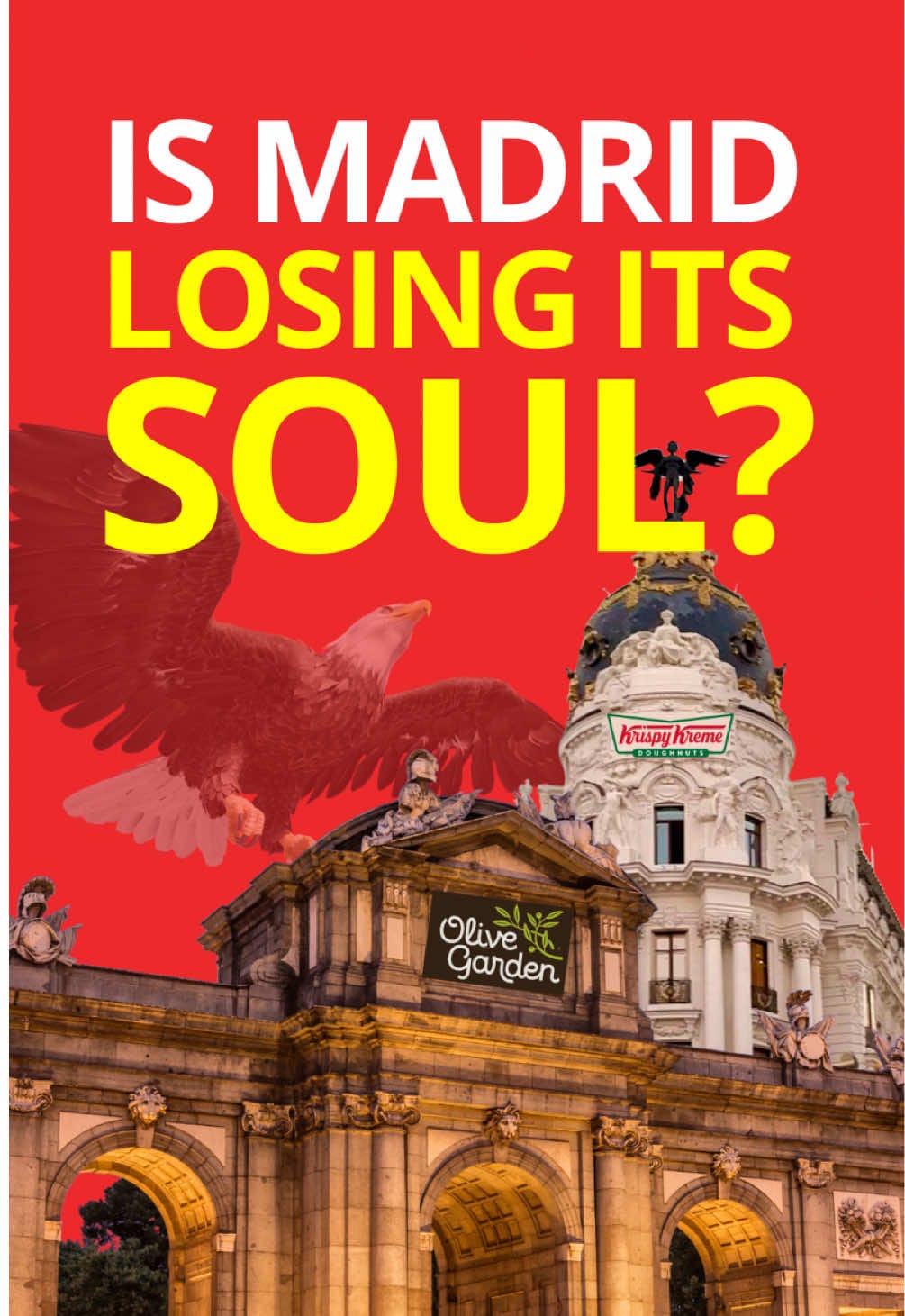
If you’re not following us on TikTok yet, you’re missing out. We’re posting exclusive content with our collaborators across Spain, breaking news updates, and pop culture coverage. Click on the post above and come hang with us!
🙏 Once again, please remember to share this newsletter with your friends on social media. The more we grow, the more information we’ll be able to offer each week.