


March 2, Madrid
🎉 Welcome to the third (beta) issue of Tapa, a newsletter about all things Spain! (We’re not crazy about the name so it may change in a few weeks).
👨🏻💻👨🏻💻 Tapa is an English-language, weekly newsletter created by journalists Ian Mount and Adrian Bono (our bios are at the bottom).
🇪🇸 Our goal is to help you understand what’s happening in Spain. If you don’t have time to follow the news, struggle with Spanish or simply love explainers, then this is the newsletter for you.
🌎 We cover the serious stuff (politics, economy and social issues) and the trivial stuff (lifestyle, social media, and memes).
🕒 We keep it short and simple. We value your time.
Alright, let’s do this. And if you haven’t subscribed yet, please do by clicking on the button below.
It’s been too long since we had a good political scandal
💰Caso Mediador: BoJo wasn't the only pol partying in lockdown
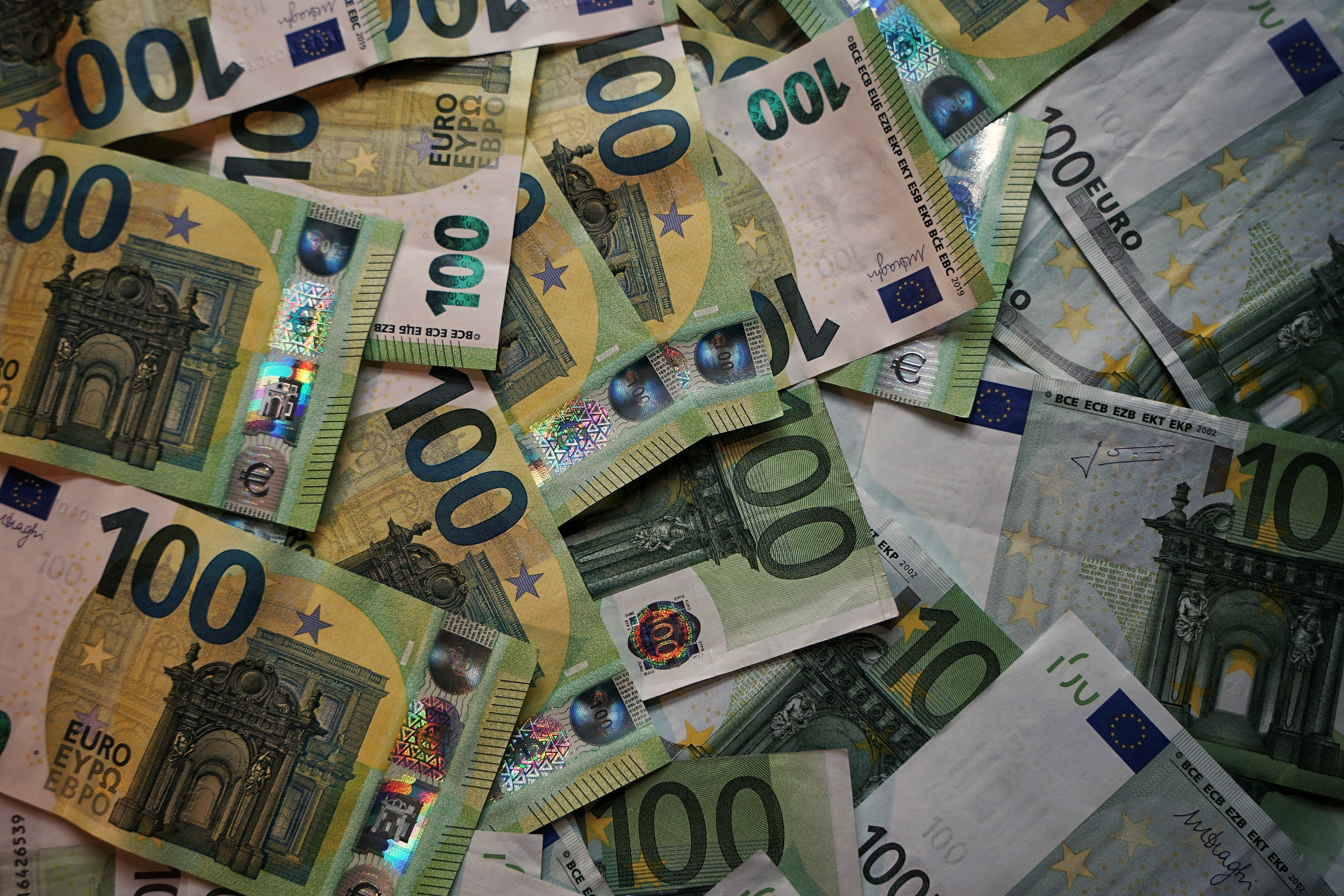
A PSOE MP was among 12 Canary Islands-based pols and business people who got busted for influence peddling. On the surface, the case—known in the Spanish press as Caso Mediador—looks like a typical pay-to-play scheme where business people pay pols to avoid inspections or win contracts. Typical, that is, except for the library of videos and photos of the conspirators doing cocaine and cavorting with prostitutes.
Caso Mediador started small: the sports director of the Tenerife island council went to the police after he discovered €2,575 in unknown charges on his credit card when he went to Corte Inglés to buy glasses.
That tip led police to Marco Antonio Navarro, a colorful businessman with 5 criminal convictions for everything from robbery to driving without a license. Navarro denied stealing the sports director’s credit card—but he said he did have proof of political corruption in the Canarias. And did he ever!
Navarro’s phone held compromising data: 107,000 photos, 40,000 audio recordings, and 3,100 vídeos. Turns out that Navarro was the nexus between business people who wanted to make money in the Canarias and PSOE politicians and functionaries who controlled the pursestrings—making him the mediator, or El Mediador.
El Mediador introduced the business people to members of the Canarian political class led by PSOE pol Juan Bernardo Fuentes Curbelo (AKA Tito Berni) who came to Madrid as a substitute national MP in 2020.
To join the scheme, business people paid a €5,000 “revolutionary tax” or “first toll”. Overall, at least 17 payments were reportedly made.
Check out the 12 busted pols and business folks here; they include a retired Guardia Civil General nicknamed Papá and a guy known as ‘The cheese dude’.
Don’t forget the Mediador’s phone! Tito Berni liked to conduct business in his parliament offices—and he didn’t mind partying afterwards with his clients. Like, seriously party, with cocaine, prostitutes, and viagra (He and the Mediador would choose prostitutes over WhatsApp —“Pass me the catalog,” Berni once demanded). Oh, and they did this while Spain was under various degrees of COVID restrictions. Happily, the Mediador recorded it all for posterity.


Other shoe dropping time: Tito Berni reportedly had two group dinners with PSOE MPs—one with 15 and the other with 5. Their names have yet to be released, and the PSOE, which pushed Tito Berni out, now says it has no evidence of any more corruption—and would very much like everyone to pay attention to something else.
Fun fact: The Ramses restaurant where the dinner with PSOE pols took place is just around the Puerta de Alcalá from Arahy, where Mariano Rajoy spent 8 hours while Pedro Sánchez was pushing through a no-confidence vote to remove him from office.
The far-right strikes back (and probably strikes out)
❎ Vox files no-confidence motion against Pedro Sánchez (again)

You can be excused for not knowing who Prof. Ramón Tamames is. Before this week, we didn’t either.
What is happening? Far-right Vox is once again calling for a no-confidence vote in Parliament to oust PM Pedro Sánchez.
The motion won’t succeed as no other party plans to vote for it, so it’s being seen as a political move to push the center-right PP further right and steal some of its voters during an election year.
89-year-old economist Ramón Tamames has been picked by the hard-right party to be PM if the no-confidence vote succeeds (0.1% chance). A former member of the Communist Party (yes, you read that right), Tamames once proposed a “nación catalana” (which is not exactly Vox-y).
So…Why him? Ramón Tamames is a fairly well-known intellectual and political figure whose ties to the Communist Party had more to do with fighting the Francoist dictatorship than abolishing the proletariat.
After Franco’s death he abandoned the CP and became an MP for the Federación Progresista, a left-leaning party he founded in the 80s. Later that decade, he abandoned the party and joined the Centro Democrático y Social party, which was more centrist.
He eventually quit politics and focused on business, as he has admitted in the past that he become “more economically conservative”.
Tamames stands against almost everything that Vox represents, but they do agree on a few things—economic policy, the territorial unity of Spain and the defense of the Constitution.
Where does the center-right Popular Party stand? Right now, the PP is caught between a rock and a hard place.
When Vox tried its first no-confidence vote in 2020, the then-leader of the PP, Pablo Casado, spoke against the far-right party’s move (his speech was even praised by left-wing leaders).
Casado is now gone, and moderate new party leader Núñez Feijóo has announced his party’s abstention—which came as a surprise. Analysts believe the new PP boss is abstaining because it is increasingly likely that the PP will be forced to form a coalition with Vox if they can after elections later this year.
The PSOE’s Sánchez hopes to capitalize on this by showing voters that if the PP wins the national elections later this year, they will have no choice but to form a coalition with the far-right.
🔔 A Message From Our Sponsor

Secret Kingdoms is your English bookstore in Madrid. It specializes in Spanish history and literature, contemporary and classic novels, books for children and young adults of all ages, history and historical fiction, thrillers, science fiction, fantasy, poetry, biographies and much more.
Located on Calle de Moratín 7 — a few blocks away from the Prado Museum — and with over 20,000 new and used books, Secret Kingdoms has something for everyone.
Find out more at www.thesecretkingdoms.com
💬 Five things to discuss at dinner parties this week:
1. A tomato crisis on your part does not constitute an emergency on mine.
The U.K. has been eager to blame its recent much-mocked tomato shortage and ensuing fruit and veg rationing on anything but Brexit—bad weather in Europe and Africa, high electricity prices, and so on.
In an FT interview, Spain’s ag minister Luis Planas played along—to a point. Spanish fruit and veg exports to the U.K. have suffered “no fundamental disruption” from Brexit, he said.
But, Planas added (presumably with a smile), “Not being in the EU’s single market has a significant cost”—and post-Brexit paperwork makes it harder for small Spanish producers to ship to Britain.
Food inflation has entered a tricky phase for the Spanish government as we noted late week, and with this week’s report that rising food prices pushed inflation from 5.9% to 6.1% between January and February, it must be nice to focus on someone else’s food chain problems.
2. Spain is very, very angry with Ferrovial.
The company, one of Spain’s largest construction firms, announced that it plans to move its HQ from Madrid to the Netherlands and to list its stock in the U.S. The reason? The Netherlands’ better “financing costs” and “stable legal framework” (among other things).
Spain’s econ minister Nadia Calviño called Ferrovial’s billionaire chair (and founder’s son) Rafael del Pino to “clearly express my rejection of this wrong decision”, and said that Ferrovial was “a company that owes everything to Spain, that has grown thanks to public investments financed by Spanish citizens.”
The central gov called the move “unacceptable” and “ungrateful” just at a moment when Spain is aiming to attract foreign investment. Ferrovial, which part owns London’s Heathrow airport, noted that it made 82% of its revenue outside Spain last year.
 Ferrovial@ferrovialIgnacio Madridejos, CEO of Ferrovial, talks about the corporate reorganization5:39 PM · Mar 1, 20231 Repost · 6 Likes
3. Spain’s Got Talent—Junior Edition.
8-year-old Spanish actress Sofía Otero became the youngest person ever to be awarded the Silver Bear at the Berlin Film Festival after winning the best actress prize this weekend for her role in 20,000 Species of Bees.
The film, helmed by Spanish director Estibaliz Urresola Solaguren, is a story about a nine-year-old child (Otero) who is born a boy but who considers herself a girl.
4. The digital nomads are coming!
Spain passed its “Startup Act” at the end of last year to attract non-EU entrepreneurs and teleworkers. The law—which requires applicants to earn twice the minimum wage (about $32,000/year), have an ongoing relationship with a foreign client, and have health insurance—went into effect in January, but in recent weeks the foreign “wouldn’t it be great to live in Spain and eat tapas” press has gotten ahold of it, so expect a deluge.
Talking point: Digital nomads can stay for 5 years and pay taxes at a flat rate of 24% on annual income up to €600,000, much like the so-called Beckham Rule (named after the Real Madrid footballer who was one of the first guiris to take advantage of it).
5. In like a lion…out like a lamb?
Storm Juliette turned parts of Spain—including its islands—into a weird winter wonderland this week. This season’s coldest temperatures were recorded between Monday and Tuesday with some areas reaching -16 ºC.
The weirdest images came from the (usually warm) island of Mallorca, where it was snowing at sea level.
But don’t let that fool you: 2022 was Spain’s hottest year on record, and including the recent snow, the Spanish Pyrenees have only gotten 2 meaningful snowfalls this winter.
EL PAÍS@el_pais🔴 Hacía tiempo que no caía tanta nieve en Mallorca, donde ahora sigue lloviendo. Carreteras con problemas, poblaciones sin luz y un aviso a la población para que evite los traslados son la última hora del paso de la borrasca por Baleares elpais.com/espana/2023-02…elpais.comLa borrasca ‘Juliette’ se ceba con Mallorca y deja torrentes desbordados y cortes de luz 9:03 AM · Feb 28, 202311 Reposts · 53 Likes

🥂 Bonus Round: 5 Things to Do in Madrid This Weekend

What happens inside a museum when the lights go out? Soon you’ll be able to find out. Starting March 4, the Prado is launching night-time hours on the first Saturday of every month, from 8:30 p.m. to 11:30 pm. The plan is to open different galleries each week. The principal attraction this Saturday will be the space that displays celebrated works such as Christ washing the Disciples’ Feet by Tintoretto, Charles V at Mühlberg by Titian and The Three Graces by Rubens.
Who says Sundays are for doing nothing? If you’re into electronic music and masquerade balls, we have a plan for you. This Sunday (March 5), German DJ and producer duo Claptone (the ones with the plague masks!) are celebrating carnival in style by bringing their Ibiza house/tech house event to Madrid with a masquerade ball in the Las Ventas bullring. Get ready to dance from 5 p.m. to midnight. Tickets start at €22. Click here for more.
Madrid is hosting the 27th edition of Teatralia, the International Festival of Scenic Arts, this month. For three weeks, the Madrid region will offer a wide variety of options, from theatre and circuses to contemporary dancing and magic that feature incredible backdrops, murals and prop pieces. You can check out the program here.
The Santiago Bernabéu Stadium hosts a semi-final match of Spanish football’s Copa del Rey today. Not just any match, mind you: The clash between Real Madrid and Barcelona represents the 14th time that the two sides face each other in the Copa del Rey (and as we know, they’re bestis). For tickets, check the Real Madrid website. Even better, stake out a spot in your local bar 45 min. before the game. The chopitos will be markedly better and the cañas more plentiful.
The Dalí Challenge at IFEMA closes this weekend. This “unique and groundbreaking way to experience art” (i.e. it’s trippy) features over 150 paintings the exhibit urges you to “lose yourself in the dreams, obsessions and works of the genius who is Salvador Dalí and discover the true essence of his life, his work and the historical importance of this artist.” Last day is March 5. Click on the link above to get your tickets, starting at €16.50.
🙏 Before you go, please remember to share this newsletter with your friends on social media. The more we grow, the more information we’ll be able to offer each week.
We’ll be back next week with more.
👥 About the authors
Ian Mount
Ian Mount is a Madrid-based writer, editor and journalist who has written about politics, business, economics, sports—and wine—in the U.S., Argentina and Spain for more than two decades.
Ian’s news stories and features have appeared in print and on radio at the Financial Times, the New York Times, NewYorker.com, Bloomberg Businessweek, New York, Fortune.com, The World, Marketplace and many other outlets.
His book The Vineyard at the End of the World: Maverick Winemakers and the Rebirth of Malbec (W.W. Norton, 2012), was chosen by JPMorgan Private Bank for its annual summer reading list (aka the “Billionaire Book Club”).
Ian is on Twitter at @IanMount
Adrian Bono
Adrian Bono is a multimedia journalist and media consultant who has been covering politics and pop culture in the US, Latin America and Europe for over a decade.
His opinion has been featured in the BBC, NPR, Al Jazeera and Univision, and he has appeared as a contributor on The Guardian, Monocle and Business Insider.
He has worked for publications such as Infobae and the Buenos Aires Herald and has been invited to speak on the future of journalism and the rise of disinformation in Latin America, the United States and Europe. He is based in Madrid.
Adrian is on Twitter at @AdrianBono