

🗳️ Spain’s election pre-season comes to an end (and it’s sad)
Plus: Florentino's wacky press conference, and more Eurovision drama!


Madrid | Issue #147
🇪🇸 The Bubble is Spain's #1 English-language, best-selling newsletter. We offer paid subscriptions, and we’d be thrilled to have your support!
🚨 Customize your subscription! You can personalize your Bubble experience so you only get the emails you want—and never the ones you don’t. Click here to learn how.
📺 Sponsorship opportunities. Want to get your brand in front of our engaged and influential audience of professionals, creatives, and government workers? We’re now offering a variety of ways to do so. Click here to find out how and book a spot.
Stumbling to the finish line
👮♀️ The death of two policemen turns Andalucía’s big election upside down
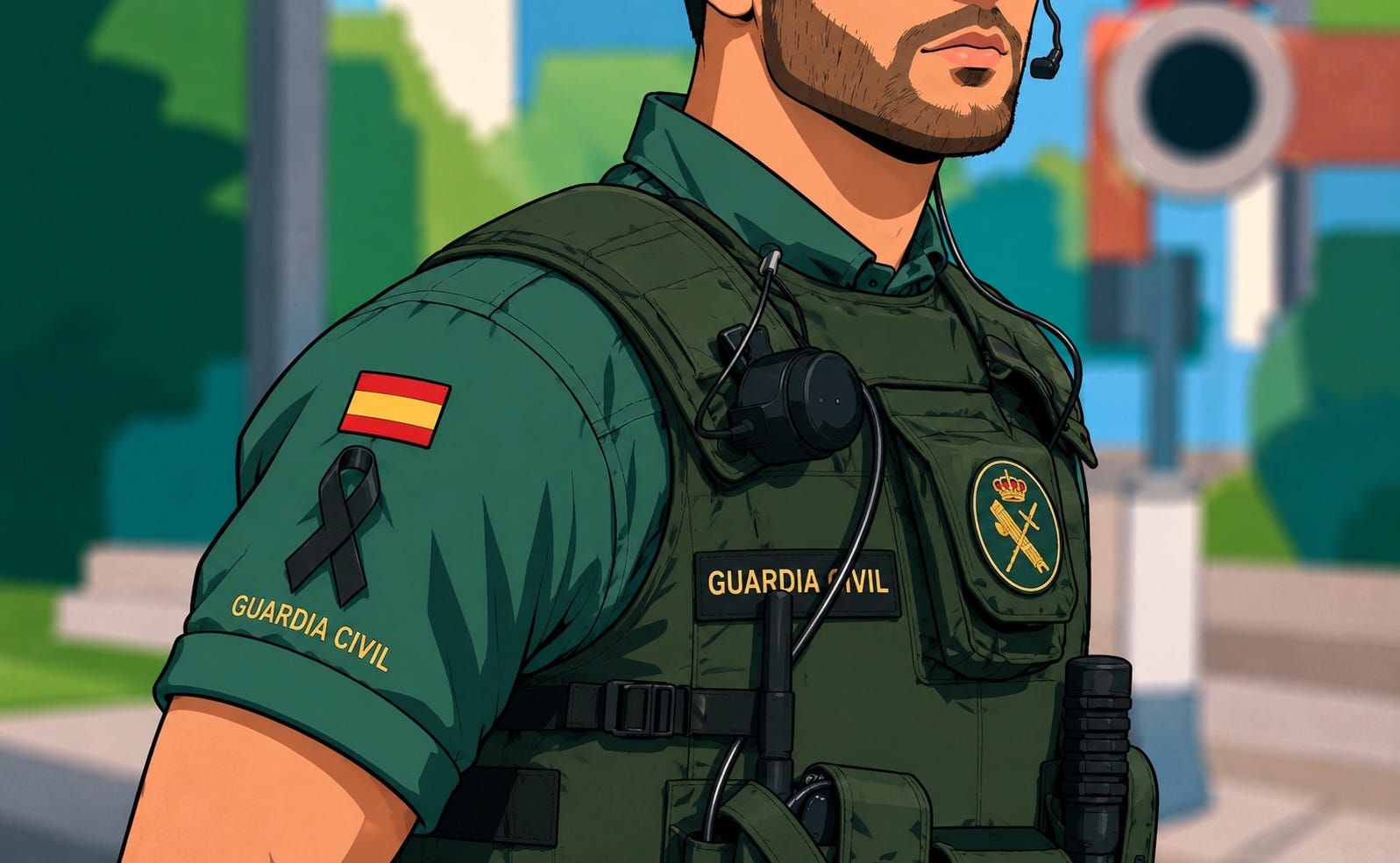
This Sunday’s Andalucía regional elections — likely the last dry run before national polls — were already looking grim for Prime Minister Pedro Sánchez’s PSOE. The numbers, let’s just say, are not there. Then two Guardia Civil officers died chasing drug smugglers off Huelva, and his party contrived to score three own goals in three days. Now, his candidate — the charmless ex-treasury minister María Jesús Montero — is heading into Sunday looking like someone who really, really wants to lose.
The spark that lit the fire. Two Guardia Civil officers — Jerónimo Jiménez and Germán Pérez — died on Friday after their patrol boat crashed into another while chasing a narcolancha (i.e., a boat specifically designed and used by drug traffickers to transport illegal narcotics) off Huelva.
Simmering anger. Drug trafficking has colonized this coastline as enforcement pressure pushed cartels west from the Campo de Gibraltar. But Huelva’s Guardia Civil was operating with 300 fewer officers than it needed, in semi-rigid boats without night vision, against narco speedboats with four engines and sometimes armed crews. Their colleagues had warned their superiors about exactly this — in a detailed report, months earlier. The warnings were filed and forgotten.
Own goal #1. The Saturday funeral of the officers. With the campaign suspended, Montero attended — and got booed. Interior Minister Marlaska did not come, citing the hantavirus cruise operation in Tenerife.
The government did send two lesser officials, who no one considered adequate, least of all in an election campaign in the affected region. (Context: at a similar funeral in 2024 after the Barbate narcolancha attack, one dead officer’s widow refused to let Marlaska place a medal on the coffin. He has history here.)
Own goal #2. Monday night’s debate. Describing the deaths, Montero used the phrase “accidente laboral” — workplace accident — to describe the officers’ deaths.
Exqueeze me? Far-right Vox’s Manuel Gavira fired back immediately: “These aren’t accidents, they’re murders.” Even the far-left Adelante Andalucía candidate used similar language to go after her. Montero stood alone with her phrase, which sounds like what happens when you cut yourself while making a hamburger at a Burger King.
Own goal #3. Tuesday’s cabinet meeting press conference: The government spokesperson refused to correct Montero. So she corrected herself: Montero posted on social media describing their deaths as an “acto de servicio” — technically a walk back or rectification or something. But she did not say sorry.
Cherry on top. On Wednesday, Marlaska spoke at a Guardia Civil graduation ceremony in Jaén and was booed twice when he mentioned the deaths. He emerged saying he was “hurt and furious.” He also clarified, yes, that the deaths were obviously “acto de servicio.” PP leader Alberto Nuñez Feijóo demanded his resignation.
So what about the election? PP incumbent Juanma Moreno — steady, competent, largely boring — was heading for 54-55 seats, possibly an absolute majority, before any of this happened (which means he may be able to govern without having to make a deal with Vox).
Montero herself was polling below 30 seats, the PSOE’s historic worst. At the debate, she couldn’t land a clean punch even on topics where Moreno was vulnerable (a breast cancer screening scandal, for instance), and walked away having gifted the opposition a week’s worth of clips.
What next? Andalucía is Spain’s most populous region and the last significant test before national elections. Moreno, enjoying himself, was blunt about the stakes: if his majority is “lethal” for PSOE, “Sánchez won’t make it to Christmas without calling elections.”
After this week, that looks considerably less like bravado.
More news below. 👇👇
💬 Five things to discuss at dinner parties
1. 🦠 Spain contains the hantavirus (yay!), but politicians fight anyway
We did it! After days of global attention, rising anxiety, and a cruise ship that felt straight out of a bizarre mashup of Contagion and Speed 2: Cruise Control, Spain has officially brought the hantavirus crisis under control (or so it seems).
Hello, and goodbye. The MV Hondius, which had been stranded with multiple cases and three deaths on board, finally docked in Tenerife. Passengers were evacuated, and the operation went a lot better than expected.
Look at me! PM Sánchez called the mission a “success” and even said it was “a source of pride to be Spanish.” The WHO leader, Tedros Adhanom Ghebreyesus, backed him up and said there is nothing that suggests a major outbreak is coming.
Crisis not averted. But while the PSOE-led government was celebrating the end of the operation, the Canary Islands government was fuming. At the center of it all is Fernando Clavijo, the regional president and leader of Coalición Canaria, a regionalist, center-right party that has built its identity around defending the islands’ autonomy.
How dare you! Over the past few days, Clavijo has accused the central government of acting with “arrogance,” “prepotence,” and even “lies,” claiming that his administration was sidelined at key moments and that crucial information about the operation was either delayed or never properly shared.
No news. He insisted that he learned about key developments through the media rather than through official channels, and even suggested that Madrid concealed the existence of a positive case on board. The government denies this, arguing that what was described as a “positive” was in fact a non-conclusive test that later came back negative.
Swimming rats! Clavijo even said infected rodents could leave the ship and reach land (the central government said his research came from ChatGPT).
What happens now? The 14 Spanish passengers have been transferred to Madrid’s Gómez Ulla military hospital, where they are undergoing a 42-day quarantine. One of them has tested positive and begun showing symptoms, though he remains stable, while the rest continue to test negative under close monitoring.
Across Europe and beyond, other passengers are being tracked, part of an effort to ensure that no further transmissions emerge. The WHO says the risk remains low, but also warned that, given the virus’s long incubation period, this isn’t over yet.
2. ⚽ Real Madrid bossman Florentino Pérez loses his marbles after the team’s season from hell
Florentino Pérez held his first press conference in over a decade on Tuesday, and wow did he have a “Is grandpa off his meds?” moment. Pick your metaphor — a slow-motion train wreck, a sandcastle at high tide, Kash Patel speaking in public, whatevs — it was gruesome in a way we’d never expect from a dude with more power (at least in football) than gawd.
The proximate reason for the conference? Pérez announced he was calling early elections for team president, which he has been since 2000, with a three-year break from 2006 to 2009. Since then, he’s been re-elected unopposed every four years.
Democracy, Bernabéu-style. To run, candidates for Real Madrid’s presidency must be Spanish, a club member for 20 years, and able to personally guarantee €187 million — 15% of the club’s annual budget. 🤑
Are you a Mexi-can? Pérez referred to his rumored rival as someone with “a Mexican accent” who “talks with electricity companies” — a jab at 37-year-old Enrique Riquelme, an alicantino whose Cox Energy‘s biggest market happens to be Mexico. He called potential rivals “children,” dared them to show their faces, and delivered the day’s signature line: “They’ll have to shoot me to get me out.”
But there was so much more on the plate…
Florentino’s grievances were many: the press (he named the ABC newspaper 27 times and called out journalists by name), Barcelona (whose payments to the referee chief he called “the greatest scandal in football history”), and referees, who, according to him, stole seven league points from him, plus 18 league points this season alone.
Strong as a bull. Pérez denied cancer rumors — “If I had cancer, wouldn’t I be in an oncology ward?” — called a female journalist “that girl”, and questioned whether another “girl” knew anything about football.
The response was swift. Spain’s Equality Minister called the remarks “anachronistic and machista.” The journalist he doubted wrote back: “Yes, Mr President, that’s who I am. A woman. What does it matter what I know about football? I do know the damage outside the Bernabéu.” Barcelona F.C. announced their lawyers were looking into it.
Of course, Florentino has plenty of reasons to be grumpy. This is Madrid’s second straight season without a title — the first time in 20 years. He fired his star coach, Xabi Alonso, after seven months, and current helmsman Álvaro Arbeloa looks to be next. Two players — Tchouameni and Valverde — brawled for two days running, leaving Valverde in a wheelchair and both with club-record €500,000 fines. Barcelona are champions, 14 points clear.
Silver lining…ish? At least Arbeloa — the coach he’s expected to replace — has Florentino’s back: “I know what this club was like before Florentino. And I’ll take these 26 years.” Sweet. The likely replacement is rumored to be former Real Madrid coach José Mourinho. Two aging glories, well past their peaks, holding each other up like drunks leaving a bar.
P.D. On a TV interview Wednesday, Pérez claimed he'd only received "messages of congratulations” about his press conference. Maybe he's surrounded by yes-men? Just a thought.
3. 😨 Ex-FC Barça star Gerard Piqué also had a tough week
The former football star and Shakira diss track-target Gerard Piqué learned this week that the reason it’s so easy to make bank with insider trading is because it’s illegal. And that you can’t yell at referees in football. And Shakira has her own life. It was a lot.
The big one. Spain’s market regulator CNMV fined Piqué €200,000 for insider trading after he bought shares in a workplace health and safety company two days before its takeover was announced — based on a tip from a businessman friend.
Piqué held the stock for a week, sold it, and pocketed roughly €47,000. So, he made €47k, owes €200k, and receives a “very serious offence” on his permanent record. The friend who tipped him off was fined €100,000. Being friends with Piqué can be expensive.
Meanwhile, in football. Piqué owns FC Andorra, a second-division club whose 1-0 loss to Albacete last weekend prompted him to allegedly tell the referee to “leave under escort so that you aren’t attacked,” and to note that “in another country they’d beat you up, but here in Andorra we’re a civilized country.”
The Spanish football federation was not charmed. Piqueé got a six-match ban and a two-month suspension for “acts that undermine the dignity and decorum of sport.” The dignity and decorum of sport, it should be said, were also not charmed.
Addendum. We were charmed to learn while reporting this story that Piqué’s second last name is Bernabéu, which is the name of the stadium of his former archrival, Real Madrid. Which is, let’s be honest, kinda funny.
And then there was Shakira. At her concert for two million people on Copacabana beach, she called herself a “single mother” — implying Piqué isn’t around much for their two kids. He’s reportedly furious, and his team is considering legal action. His lawyer, asked for comment, said: “I don’t know anything, truly.” As in, “Speak to the hand.”
Suing Shakira — the woman who turned their breakup into a global hit — would be a bold choice. We’re rooting for it because god knows it would give us something to write about.
4. 🏳️🌈 Spain is the best European country for LGBTQ+ rights (homophobia still exists, though)

Suck it, Malta. Spain has just topped ILGA-Europe’s 2026 Rainbow Map, the most authoritative annual ranking of LGBTQ+ rights across the continent, knocking Malta off its long-standing perch and becoming — officially! — the best place in Europe to be queer.
ILGA who? ILGA-Europe is the largest LGBTQ+ organization in the world. Every year since 2009, it has published its Rainbow Map, ranking 49 European countries on a scale from 0 to 100% based on their laws and policies affecting LGBTI people.
Spain scored 89%. (Great!) The EU average? A humbling 52%. (Not so great).
Spain is killin’ it. Over the past few years, Spain has quietly (and then not so quietly) built one of the most progressive legal frameworks for LGBTQ+ rights in the world.
The 2023 LGBTI and Trans Laws were landmark. Equality action plans, an independent anti-discrimination authority, and the removal of the requirement that trans people get a medical diagnosis or treatment before their identity is legally recognized — no doctor’s note, no surgery, no hormones required. You know. Big stuff.
A beacon (with some shadows). Over the last several years, Spain has become something of a refuge and a reference point for the LGBTQ+ community in Europe. At a time when other countries are legally dismantling protections, Spain has been moving in the opposite direction.
This stands out in a continent where the Rainbow Map’s bottom tier reads like a tour of authoritarian regression: Russia, Azerbaijan, Turkey, Belarus, Armenia.
Still lots of work to do. The Rainbow Map measures laws and policies, but it does not measure what it’s like to walk down the street. And on that front, Spain has a problem.
More than half. According to the Estado del Odio LGTBI+ 2026 report, 54% of LGBTQ+ people in Spain said they experienced harassment, discrimination, or a physical attack in the past year.
That’s up 12 points from the previous report. And one in two trans people has been a victim of physical violence.
Our take. Yeah, the laws are there, and the protections are real. But the gap between legal progress and real life is wide, and growing.
ILGA itself flags this — legal rankings don’t capture daily reality. And 74% of those who reported incidents to authorities had a negative experience doing so, which goes some way to explaining why most victims still don’t report at all.
Tsk tsk.
5. 🎤 More Eurovision drama: Israel, Spain… and a few hundred voters

Only getting started. So, this week’s Eurovision drama didn’t come from the stage in Austria. Nope, it came from The New York Times, and it involved Spain.
Gaming the system. The paper dropped an investigation suggesting that last year’s Eurovision vote may have been far easier to influence than organizers have admitted, and that Israel knew exactly how to play the system. Their example? *drumroll*… Spain!
Israel’s representative absolutely crushed the Spanish public vote in 2025, according to the report, taking roughly a third of all votes (around 47,000) despite polls showing the Spanish public opinion was largely critical of the Israeli government, which is… odd.
Euro-voting is tricky. Eurovision is not one person, one vote. Viewers can vote multiple times; up to 20 times last year, now capped at 10. That means a relatively small group of highly motivated voters can massively amplify their impact. The NYT estimates that in Spain, just a few hundred people voting repeatedly could have secured Israel’s win in the televote. No bots, no fraud. Just good coordination.
In Spain, Israel’s entry secured around 33.3% of the televote, the NYT reports, which translated into roughly 47,570 votes. The second-place country, Ukraine, was way behind with about 9,620 votes (6.7%).
On paper, that looks like a landslide. But when you factor in the ability for each person to vote up to 20 times, the picture changes. To reach those 47,000 votes, you wouldn’t need tens of thousands of people—you could get there with just around 2,400.
Not illegal, but kinda messy. Even the contest’s own director admitted Israel’s promotion last year was “excessive.” And yet, crucially, there was no external audit, no full release of voting data, and no real transparency about what actually happened.
Loving the attention. Spanish media jumped on the story. RTVE had already raised concerns last year, asking for an audit after Israel kept winning public votes in countries where public opinion didn’t match the results. That request went nowhere. Instead, Eurovision tweaked the rules: fewer votes per person, and a ban on “disproportionate” promotional campaigns.
Yet here we are again. Just days before this year’s contest, Israel’s delegation was warned after circulating videos explicitly telling people to vote 10 times (the new maximum).
Spain isn’t even playing. RTVE is one of five broadcasters (along with Ireland, the Netherlands, Slovenia, and Iceland) that decided to boycott this year’s contest over Israel’s participation, citing both the war in Gaza and what they describe as repeated rule violations. It’s one of the biggest fractures Eurovision has faced in decades.
Espanovision. Instead, as we mentioned last week, RTVE is doing something… very Spanish. Rather than airing Eurovision this Saturday, it’s broadcasting its own musical show to compete with it.
🔔 Don’t forget to follow us on TikTok!
 Tiktok failed to load.
Enable 3rd party cookies or use another browser
If you’re not following us on TikTok yet, you’re missing out. We’re posting exclusive content with our collaborators across Spain, breaking news updates, and pop culture coverage. Click on the post above and come hang with us!
🙏 Once again, please remember to share this newsletter with your friends on social media. The more we grow, the more information we’ll be able to offer each week.
> We’re rooting for it because god knows it would give us something to write about.
Seated for the drama.