



Madrid | Issue #138
🇪🇸 The Bubble is Spain's #1 English-language, best-selling newsletter. We offer paid subscriptions, and we’d be thrilled to have your support!
🚨 Customize your subscription! You can personalize your Bubble experience so you only get the emails you want—and never the ones you don’t. Click here to learn how.
📺 Sponsorship opportunities. Want to get your brand in front of our engaged and influential audience of professionals, creatives, and government workers? We’re now offering a variety of ways to do so. Click here to find out how and book a spot.
Not quite the Epstein Files
👨🏻🏭 23-F gets its day in the sun
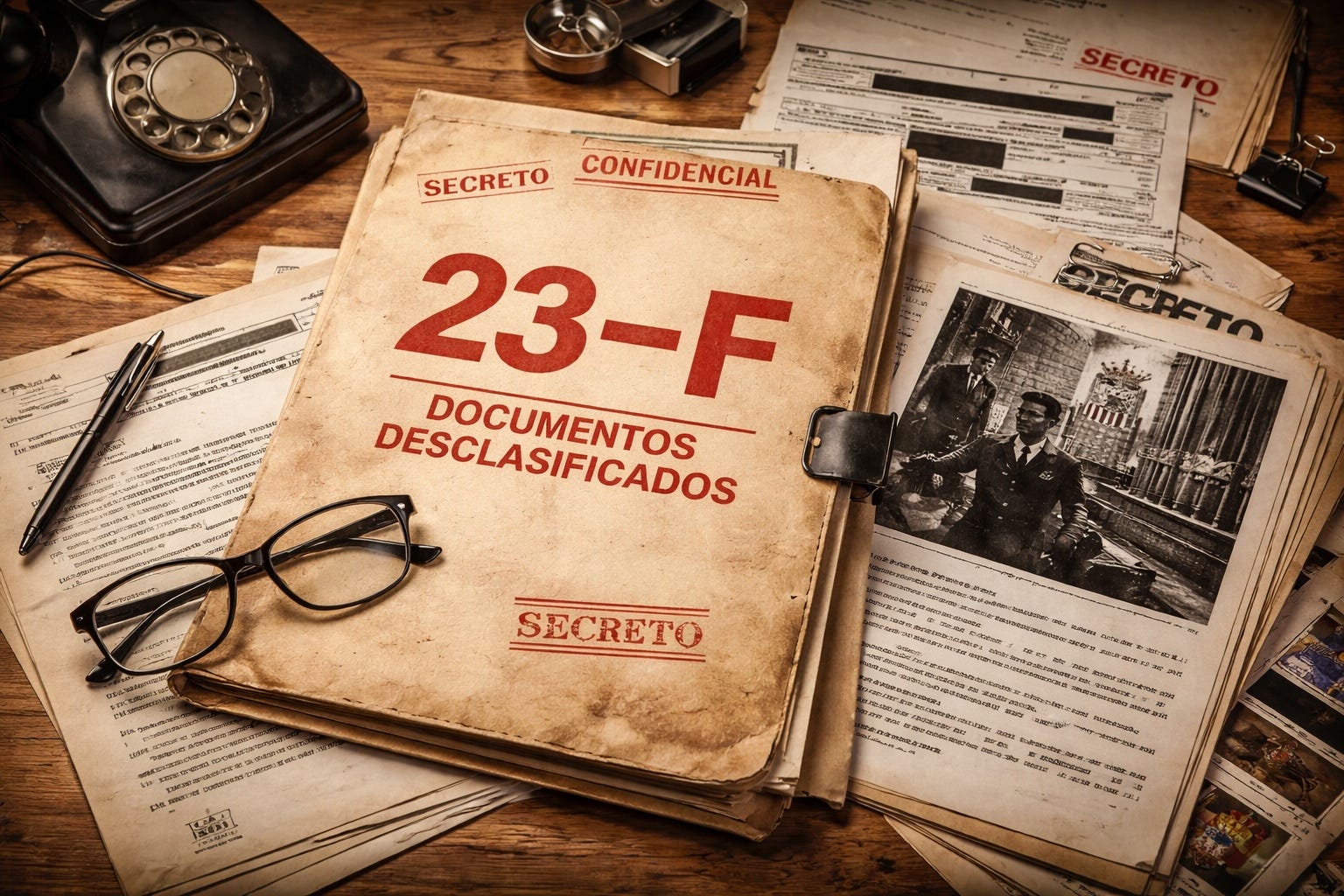
Maybe Prime Minister Pedro Sánchez was jealous of the attention the White House got around the Epstein Files document dump. Maybe he wanted to distract from the corruption clouds hanging over his government. Or maybe he genuinely believes history should be free. Whatever the reason, we’ll take it!
Dirty laundry, aired. PM Sánchez announced Monday that the government would declassify documents related to the famous 23-F — the attempted military coup d’état against Spain’s fledgling democracy, 45 years ago.
For Spanish Boomers, 23-F is pretty much the biggest domestic event in their lifetime — followed by the 11-M Atocha train station bombings and David Bisbal not winning the first season of Operación Triunfo.
The coup. On Feb. 23, 1981, Lieutenant Colonel Antonio Tejero, along with 200 armed Guardia Civil officers, stormed the parliament in Madrid during a vote to swear in Leopoldo Calvo-Sotelo as prime minister (and yes, it’s all on video). The officers held the MPs and ministers hostage for 18 hours, hoping that King Juan Carlos I would back a return to strongman rule.
Spoiler: JC1 didn’t. Democracy survived. And Javier Cercas wrote a great chronicle of the incident, Anatomía de un instante, that recently came out as a TV miniseries.
Let’s get the politics out of the way. PM Sánchez would undoubtedly like to talk about anything but the performance of his administration, so it is not surprising that the opposition parties on the right, Partido Popular and Vox, both called the move a “smoke screen,” while an ally on the left, the ERC Catalan separatists, said it was meant to “cover up” Sánchez’s problems.
But honestly, we don’t care about politics right now. We really want to know the juicy nuggets in the documents, who was in on the coup, and whether King JC1 thought, even for a second, “You know, I’d like to be a real King, not a wimpy ‘constitutional monarch.’” So let’s get into it!
Did the King know? For decades, critics have speculated whether JC1 knew more than he let on. These documents won’t put those speculations to bed, but they don’t make him look bad.
One handwritten internal analysis of the coup states that one of the main mistakes for its failure was “leaving the Borbón [aka JC1] free,” criticizing the decision to treat the King with respect and concluding that he should have been neutralized as an obstacle.
A Defense Ministry record describes a tense phone call from the Zarzuela Palace at 8:20 p.m. that day, in which the King’s secretary ordered Tejero to immediately stand down and repeatedly asked why he said he was doing it “in the name of the King”.
Tejero, however, insisted he only obeyed Lt. Gen. Milans del Bosch (another mastermind of the coup) before hanging up.
JC1 later ordered Milans del Bosch to comply. “For Spain first, and for the Crown second, you must obey”. (Around 6 a.m., the uprising was over, and Milans announced the withdrawal of his troops.)
How close did Spain come to bloodshed? The most chilling revelations concern how narrowly Spain avoided catastrophe.
Massacre averted. Authorities considered storming Parliament with a GEO (Spain’s SWAT) operation — estimates suggested 80 to 110 deaths.
Another document describes the orders given to soldiers during the takeover of Spanish public television RTVE — they were told to “shoot to kill” if necessary, with weapons ready and safeties off.
Who was really involved? The intelligence services did not emerge spotless.
A declassified report from Cesid (Spain’s former intelligence service) admits that six of its agents were involved in the coup and reveals that after the failed attempt, internal mechanisms were activated to cover up their movements.
Thank you for your service. Meanwhile, an internal Policía Nacional memo from November 1981 claims the force was the main “dam” that stopped the coup.
The human farce. Then there’s the tragicomic layer.
Fool’s errand. Transcripts of recorded calls show that during the coup, Tejero’s wife repeatedly insulted him, calling him “a fool” and “a disgrace,” and lamenting that he had been abandoned by his peers.
Even Washington seemed unsure what to make of it at first. Early U.S. cables called it an “internal matter.” Later, President Reagan personally praised JC1 for defending democracy.
And now he’s dead! Oh, and in an unexpected twist of cosmic irony, Tejero died yesterday at 93 years old. Sentenced to 30 years in prison for rebellion, he was paroled in 1996 and had been living quietly in Málaga — a nostalgic symbol for parts of the far right to the end.
Tejero will be forever remembered for getting the attention of the MPs by shooting the ceiling of Parliament and shouting “¡se sienten, coño!” — “Sit down, dammit!”
More news below. 👇👇
🔔 But first, check out our sponsor — Bureaucracy.es
We’ve teamed up with our friends at Bureaucracy.es to bring you more resources about immigration and life in Spain. Check out our guides on how to get a Spanish Digital Nomad Visa or Non-Lucrative Visa.
If you’d like their help with the paperwork to apply for these visas, or need someone to guide you through the Spanish citizenship application process, you can hire them using this link (and, in the spirit of full transparency with our subscribers, The Bubble will receive a small commission).
💬 Five things to discuss at dinner parties
1. ⛷️ Spain has its best Winter Olympics in 90 years
The boos and cheers heard round the alps. The big news from the 2026 Winter Olympics in Italy was arguably the U.S. men’s and women’s hockey teams both winning gold in thrilling overtime victories over Canada.
Or the U.S. Vice President J.D. Vance being roundly booed at the opening ceremony.
Or maybe Sturla Holm Lægreid, a 28-year-old Norwegian biathlete, breaking down in tears during a live TV interview as he apologized to his ex-girlfriend for having an affair.
Or the immortal American skier Lindsey Vonn coming back from age, surgery and broken joints to crash so hard she almost lost her leg to amputation.
But around here, the news was a record-breaking performance from Spain. “Spain?” you ask. Yes, Spain…
Historic Olympics. Spanish athletes won three medals in the Italian games. One gold. Two bronze.
Spain received all three in ski mountaineering events (trust us — it’s hella difficult).
Oriol Cardona delivered Spain’s first Winter Olympic gold in more than five decades. Ana Alonso followed up by receiving bronze for her efforts. Together Cardona and Alonso won another bronze in the mixed relay.
Accomplishment? Of course, this feels historic partly because Spain isn’t exactly a winter-sports dynasty. Or a winter sports country.
In nearly 90 years of Winter Olympic participation, Spanish athletes have built a résumé that, at best, felt like a footnote compared with Norway’s. Before this year, Spain’s total in winter medals could be counted on one hand (i.e. there were 5), with a few stray bronzes and one gold from Paquito Fernández Ochoa back in… 1972. Pre Tiktok, pre internet, pre color TV.
So why does Spain struggle in the Winter Olympics? In the words of the president of Spain’s winter sports federation, May Peus, “The tradition of ice and snow in Spain is what it is.” Winter sport in Spain has long been a minority activity, historically the playground of the wealthy, the aristocratic, the nouveau riche, or families who worked at ski resorts.
Spain has 35 ski resorts. Sounds decent. Except many can’t guarantee snow all winter. And the ones that can? They often lack the large-scale facilities needed for elite training and competition.
The high-performance centers? They’re built for summer sports (and fútbol!). They have no winter simulators, no specialized infrastructure, and no deep development pipeline.
So Spain isn’t built for winter dominance. Fine. But hey, where does everyone in the Great White North escape for sun and joy? Exactly. Spain. We bet Sturla Holm Lægreid and JD Vance will visit. Just so they don’t cry.
2. 🧯 Vox vs. 🌎: The far-right picks fights with… everyone
Vox is having one of those weeks where you can practically hear the shouting from party HQ. In just a few days, Spain’s far-right force has managed to pick fights with itself, with the PP (again), and even with its beloved Catholic Church.
Vox vs. Vox. Madrid City Hall is hosting a full-blown family feud. Javier Ortega Smith — Vox co-founder, longtime enforcer, and former secretary general — is refusing to step down as the party’s spokesperson in the city council.
The awkward bit? Party leader Santiago Abascal has suspended Ortega Smith and begun the process to expel him. But he can’t simply fire him from City Hall. The spokesperson is chosen by the five-member municipal group, and it’s split — three back Ortega Smith, two back Abascal. The numbers aren’t on the boss’s side.
A more awkward bit? Ortega says he’ll only leave if councillors vote him out. But they won’t. If Abascal expels the rebels, they could remain on the council as non-attached councillors, costing Vox resources and influence.
Why the drama? This isn’t ideological. It’s a power struggle. Ortega Smith is casting himself as a victim of Abascal’s dictatorial top-down control, while the leadership line is simple: the direction decides, everyone obeys. But Ortega Smith says he’ll go to court, if necessary — and is hinting that he knows a lot about how the party works behind the scenes. 😉
Vox vs. the PP. Meanwhile, the PP still needs Vox to govern in places like Extremadura and Aragón, and negotiations are proving… difficult.
PP boss Alberto Nuñez Feijóo tried to impose order this week by publishing a national “framework” laying out the PP’s red lines for deals with Vox: He wants proportionality, approval of all budgets, lower taxes, institutional respect… you know, the whole “we’re the adults in the room” deal. (It’s also a preview of how Feijóo wants politics to look if he ever becomes PM).
Abascal bristled with pure indignation because he hated the power dynamic, saying that the PP is treating Vox like a wild animal that needs to be “tamed.”
His argument? If you need our votes, you don’t get to hand us a rulebook like we’re interns. The PP then tried to walk its document back, but the damage was done.
Vox vs. the Catholic Church. In the oddest subplot, there were reports that Pope Leo XIV (who, btw, just confirmed he’ll be in Spain June 6-12) privately warned bishops that his biggest concern in Spain was the far right trying to “instrumentalize” the Church and “win the Catholic vote”; multiple outlets insisted he explicitly mentioned Vox.
Vox’s leadership tried to defuse it at first, but then Abascal dismissed the supposed comment as an invention fed to the press by “a bishop who collaborates with immigration.”
Either way, it’s a headache. Vox wraps itself in Catholic identity, but the Spanish Church hierarchy has been publicly supportive of migrant regularization and has pushed back on Vox’s anti-immigration rhetoric.
3. 🪩 You can use Spain’s youth card for clubbing, right? Um, no
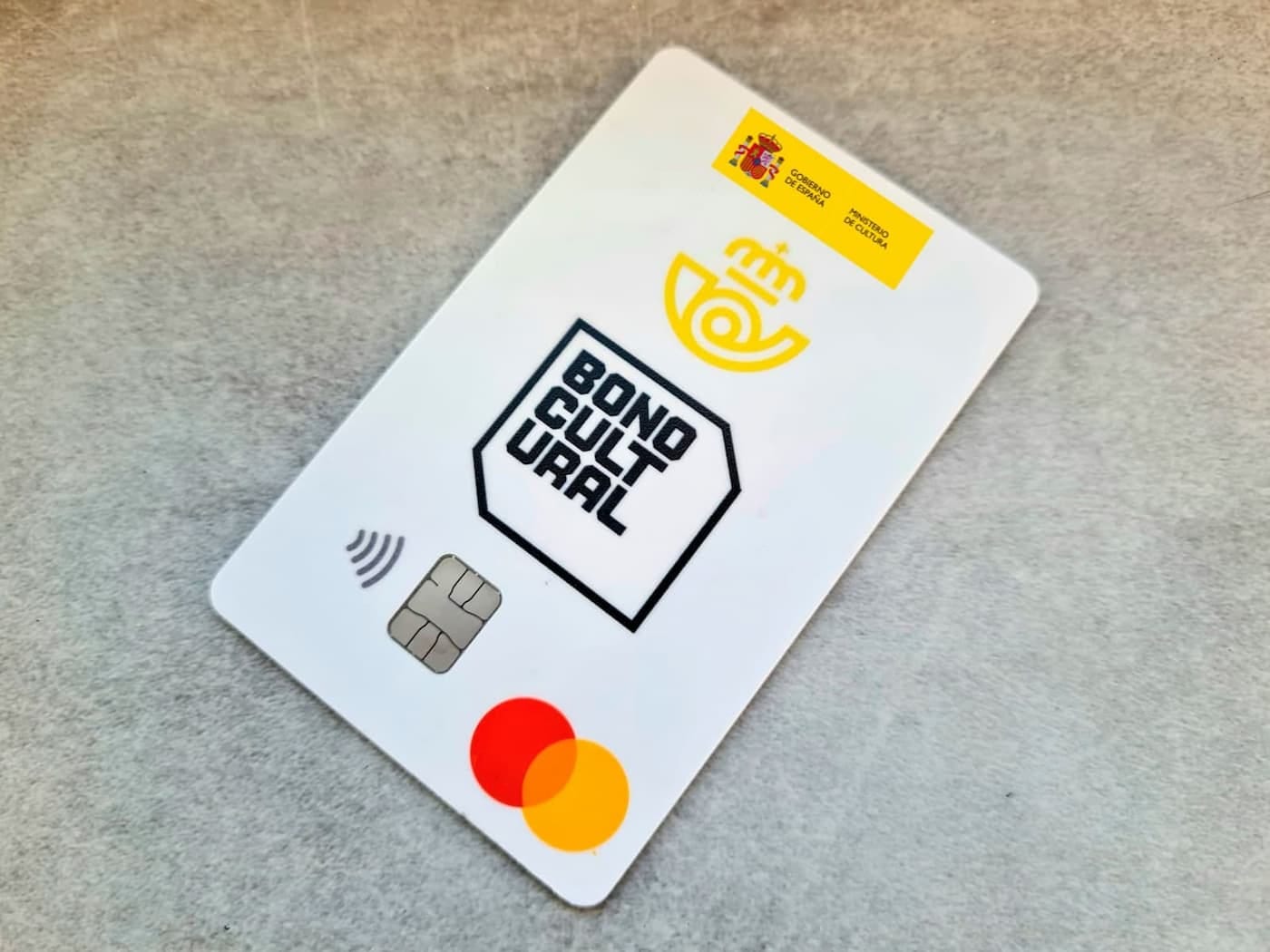
Kids these days. TikTok has discovered what may or may not be a loophole in Spain’s Bono Cultural Joven — and the internet has decided that Pedro Sánchez is now personally funding 18-year-olds’ tequila shots. Spain’s Ministry of Culture? Not happy about the turn of events.
Party = art. Over the past few days, viral videos have claimed that young people can use the €400 cultural allowance they get from the state to get into nightclubs. In one widely shared clip, a guy confidently explains to a group of teenagers how the prepaid card can be used at a Madrid club because “people don’t realize it works for nightlife.”
Revolutionary scholarship. Some of the teens brag that they’ve still got €150 left on their cards. In other words, they’re ready for a long night out. The meme spreading online is simple and irresistible: “Pedro pays for your party.” But not quite…
What the card actually is. The Bono Cultural Joven gives 18-year-olds €400 to spend on cultural goods and “experiences.” It’s split neatly into buckets: €100 for physical products (lol, imagine an 18-year-old buying a physical magazine 😭); €100 for digital products (subscriptions, video games); €200 for live cultural events (theatre, cinema, museums, concerts)
It’s valid for one year, usable in 3,800+ registered establishments, and backed by a €170 million budget. This is not pocket change.
The problem? Nightclubs are not culture. At least not under the program’s rules. The money is meant to get teens into museums, not into the VIP. And certainly not for bottle service.
So how are these payments going through? The suspicion is that some venues are processing transactions under categories that technically qualify — for example, labeling events as “live music.” That bureaucratic gray zone is where this whole thing gets spicy.
The government response? Yeah…not amused.
The Ministry of Culture has warned that anyone using the card fraudulently “must reimburse those amounts to the Administration.” Businesses that allow improper use could face penalties — or be kicked out of the program entirely.
No fun! The government is planning to ban the sale of energy drinks to the under 16 set too. 😭
4. 🫵 Julio Iglesias strikes back in lurid sex assault scandal
If you thought Julio Iglesias would quietly huddle with his lawyers, hoping that the explosive stories of his alleged sexual assaults published last month would blow over, you would be wrong.
Take it back! This week, he struck back pretty dramatically, demanding that Yolanda Díaz, the deputy prime minister, “rectify” comments she made about the case that suggested that she, well, thought he did it.
The backstory, briefly. In January, El Diario published an explosive investigative piece in which two former employees of Iglesias’s Caribbean mansions accused the well-tanned crooner of sexual assault, coercion, and what they described as conditions akin to sexual slavery.
On to court. Their claims — involving alleged abuse in the Dominican Republic and the Bahamas — were filed before Spain’s National Prosecutor’s Office with the backing of Women’s Link Worldwide.
But no love from the law. The prosecutor ultimately archived the complaint, citing lack of jurisdiction: the alleged events took place abroad, and Spanish courts, post-2014 reforms, are picky about such things. It was a procedural dead end, not a declaration of innocence.
Enter Yolanda. On Jan. 13, just after the investigation dropped, Díaz shared the headline of the El Diario story on Bluesky and added her own gloss: “Chilling testimonies… Sexual abuse and a situation of slavery with a power structure based on constant aggression.”
And then, more. The next day on state TV, she doubled down, saying the investigation “is terrifying, it’s panic-inducing,” and that the women were in a position of “extreme inferiority.” She did, to be precise, use the word “alleged” at one point. But the overall vibe was less “alleged” and more “resounding condemnation.”
Julio would like an apology. Through his lawyer, José Antonio Choclán, the 82-year-old icon has filed a demanda de conciliación — the obligatory prelude to a criminal complaint for slander or libel. He wants Díaz to “publicly rectify,” to acknowledge the “gravely offensive and slanderous nature” of her statements, and to compensate him “in the amount to be determined based on the serious social damage caused.”
Presumption of
innocenceguilt. The filing accuses Díaz, a “high ranking public official,” of broadcasting “clear prejudices of guilt” and trampling his presumption of innocence. Iglesias, his team notes pointedly, has “never had the condition of a person under investigation or a suspect.”
And if you thought Yolanda would back down? Think again. Her response Tuesday, also on Bluesky: “I defend working women… With or without complaints,” she wrote, “women will no longer be silent.”
A quick translation. See you in court. And Díaz might have time for the fight: She announced yesterday she wouldn't run for reelection.
5. 🐶 Are teens turning into animals? Inside the Therian frenzy
Move over, Punch the monkey! Therians are the latest internet “identity panic” to go mainstream in Spain: Teenagers (and some young adults) are posting videos in animal masks, sometimes moving around on all fours, smelling each other’s butts (lol gross), and describing how they identify with a (non-human) animal on a psychological or spiritual level.
The term comes from therianthropy (Greek for “beast” + “human”). Crucially, it’s not actually new — it’s been floating around since the 1990s — but in the past two weeks it’s exploded because it’s perfect algorithm bait. It’s visually absurd, easily mocked, and tailor-made to travel fast from tiny subcultures to mass audiences on TikTok and Instagram. And the media is loving it.
Local excitement. “Therian meetups” are happening in Madrid and Barcelona, with similar flareups in Latin America (where they are all over Argentina and Mexico).
But when journalists and gawkers showed up expecting hordes of masked teens, they mostly found… influencers, hecklers, and people hoping to film something weird enough to go viral. The Therians themselves? Harder to spot.
The Therians who dare to speak publicly insist this isn’t a cosplay trend. They describe their identity as involuntary and internal and often very private.
Here’s an example. Ivy, a 22-year-old data administrator in Catalonia who says she was a ram in another life, told El Español, “A therian is someone who involuntarily identifies as an animal on some level.” Her realization emerged, she said, like a “spark” — with, “small flashbacks, lucid dreams, and behavioral signals.”
Cue moral panic. The media and pearl-clutching broader society have treated the trend either as curiosity or civilizational collapse — and that gap is where controversy thrives.
Parts of Spain’s extreme right have latched onto the trendlet. Analysts say therians are useful for the “anti-woke” right because they can serve as “proof” that society has gone insane and we live in a decadent world where boundaries don’t exist. Oh and they can then link it to trans people and LGBTQ+ rights (because, you know, first trans pronouns, then animals).
If it feels familiar, it should. Remember the Satanist panic in the U.S.? We do. That’s the period in the 80s and 90s when people reported thousands of unsubstantiated cases of Satanic ritual abuse (mix the expansion of daycare centers with fears of Satanism and it sorta makes sense?), culminating in Missouri passing House Bill 1370 in 1990, which increased penalties for crimes involving ritual or ceremony. This panic is like that, but cuddlier.
🙏 Once again, please remember to share this newsletter with your friends on social media. The more we grow, the more information we’ll be able to offer each week.