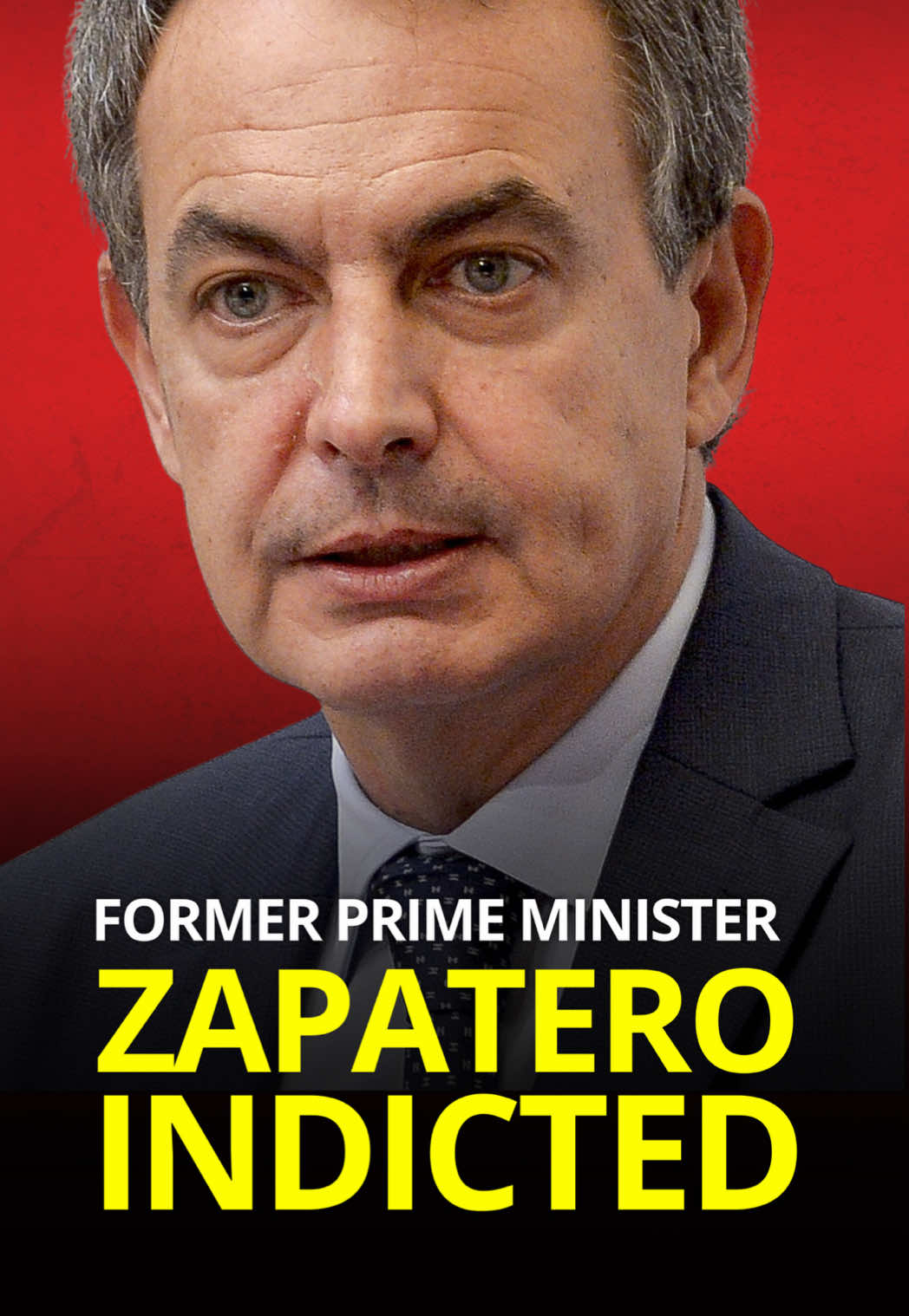
⚖️ Sánchez's 'beloved brother' goes on trial
Plus: Questions about Bad Bunny's Little House for the sexies, and the princess jumps!

Madrid | Issue #149
🚨 The Bubble is Spain's #1 English-language newsletter. We offer paid and free subscriptions (which you can customize). Or interested in sponsorship opportunities?Click here to find out how to book a spot.
Friends in high places
👨🏻⚖️ Sánchez’s bro gets his day in court: scam job or “flawless” hiring?
Oh, brother. Spain’s political drama just moved from one courtroom to another, and this time, it’s hitting even closer to home for Prime Minister Pedro Sánchez. His brother, David Sánchez, is officially standing trial in a case that’s been building for over a year.
The case centers on his 2017 hiring for a senior cultural role at the Diputación de Badajoz, a job that prosecutors believe may have been tailor-made for him.
He faced charges of influence peddling and prevarication. Basically, the prosecution said he got a B.S. patronage job given because of his brother, didn't work, and lived in Portugal to avoid taxes. One lesser charge, of accepting an illegal appointment, has been dropped because too much time has passed to prosecute it.
Co-conspirators? Several officials from Extremadura, including former regional PSOE leader Miguel Ángel Gallardo, are accused of playing roles in creating and fast-tracking the position.
It's a family affair. PM Sánchez’s wife is also under legal scrutiny in a separate case, meaning he is now governing while both his wife and his brother are entangled in court proceedings. Add the scandals surrounding the PSOE party, and 😱.
Not on Infojobs. According to investigators, the role David ended up getting didn’t even exist before he came into the picture. Internal emails show it appearing suddenly in late 2016, with unusual urgency 😒.
We have rules here. In Spain, public sector jobs are legally required to follow strict principles of merit, equality, and transparency. That means positions must be openly advertised, candidates evaluated fairly, and the selection process based on objective criteria. Personal connections? That’s a no-no.
But maybe not this time? Spain’s Civil Guard (UCO) says there are “strong indications” the position was effectively pre-assigned to David. One telling detail: before interviews even took place, insiders were already reportedly referring to the role as being for “el hermanísimo”; literally, “the beloved brother.” (Note: Pedro Sánchez wasn’t PM at the time but was already the head of Spain’s socialist party.)
Witness for the prosecution. One key witness, Cristina de Frutos, who was a seemingly highly qualified candidate for the job, told the court she was warned days before her interview that the job was already “his.”
Move on. Nothing to see here. She says her own interview lasted minutes, with no real questions asked. Her conclusion was that there was no real competition. The defense, in turn, pushes back hard, questioning why she didn’t formally report it at the time and framing it as hindsight rather than proof.
Fourteen other witnesses — mostly officials from the institution — defended the hiring process, insisting both hires were carried out properly and with “no flaws whatsoever.” (But really? What has “no flaws whatsoever”?)
But wait, there’s more. Two Civil Guard officials have testified that they were told to “stand down” and not actively investigate politically sensitive issues — like this one.
Yikes. One even claims there was pressure to produce a report concluding “there was nothing there.” Which is bad, because it suggests potential interference at the highest levels. Other agents, however, have denied receiving pressure.
When will it end? It won't.
More news below. 👇👇
💬 Five things to discuss at dinner parties
1.🚫 Feijóo is trying to remove Sánchez now, but it's not looking likely
Cue the Jaws theme. Spain’s opposition is quietly circling the current coalition government. In the middle of mounting pressure on Pedro Sánchez, center-right PP leader Alberto Núñez Feijóo is exploring whether he can pull off a political Hail Mary: a motion of no confidence that would kick Sánchez out and trigger immediate elections.
The twist. He needs 176 votes, and his party currently has 137. Add the votes from far-right Vox (33), and he has a total of 170. He’s short six! This means he can’t do it alone, so he’s reaching out to
nemesesunlikely partners: the Basque nationalist PNV and the Catalan separatists of Junts. Both of them are (begrudgingly) supporters of the Sánchez government.Refresher. A motion of no confidence is one of the few ways to remove a PM in Spain. Sánchez himself used it in 2018 to oust Mariano Rajoy.
It’s all about the timing. Sánchez’s own parliamentary allies are starting to wobble. National elections are scheduled for 2027, but frustration is building. Between political fatigue and a string of corruption scandals that have hit Sánchez's inner circle, several junior partners are openly saying this government is done.
Feijóo is probing whether those parties would go one step further and actually help bring it down.
If Feijóo gets the numbers, he says he’d launch what he calls an “instrumental” motion of no confidence (basically, a temporary government whose only job would be to call elections).
He’s even trying to make it more palatable by promising Vox wouldn’t be part of that interim government.
Not feeling it. The PNV has basically said it wants elections, but it’s not touching a no-confidence vote. Junts? Not surprisingly, it’s been more theatrical.
The party behind the disastrous (and illegal) independence referendum in Catalonia in 2017, whose leader, Carles Puigdemont, is currently living in self-imposed exile in a McMansion near Brussels, told Feijóo that if he wants to talk, he should travel north to negotiate directly with the big boss in his Belgian abode.
Feijóo’s response was not enthusiastic: “Let’s talk about serious things.”
Vox, in the meantime, is furious: They don’t like the idea of Feijóo even considering negotiating with Puigdemont (or cutting them out).
The government responds. First reaction: this is desperation. The government’s spokesperson accused Feijóo of “cynicism” for suddenly courting parties he’s spent years attacking.
Sánchez himself took a more ironic angle, pointing out that Feijóo now seems to recognize Junts as a legitimate political actor after years of refusing to do so.
Our take. Unless there’s a miracle, it’s unlikely that Feijóo’s plan will move forward. The math isn’t there, and both Junts and the PNV would end up paying a high political cost for siding with the PP and Vox.
However, don’t rule things out entirely. This is Spain, after all.
2.🐰 Bad Bunny’s Casita isn’t for you (unless you’re rich + hot)
Down the rabbit hole. Bad Bunny is in Madrid to supposedly give a masterclass in stadium shows. Instead, he may have accidentally started a culture war over a tiny pastel-colored house.
Mi casa es su casa? During his concerts, there’s a second stage called La Casita (“the little house”), a full-blown replica of a traditional Puerto Rican home, right in the middle of the crowd.
The symbolism. La Casita was born in the short film that accompanied his album DeBÍ TiRAR MáS FOToS, as a symbol of Puerto Rican identity, memory, resistance, and anti-gentrification vibes.
Fans loved it so much that his team turned it into a physical centerpiece of the tour. A house that represents “the people.” Except the people don’t seem to be getting in.
Cue the controversy. During the show, Bad Bunny moves around la casita while being surrounded by a very (very!) select group of people. La Casita, as it turns out, has become the most exclusive VIP zone in Madrid.
We’re talking Ester Expósito, Ana de Armas, Chiara Ferragni, Marta Ortega, Los Javis, plus footballers and influencers. Add to that a handful of “lucky” fans picked from the crowd, and you have the most coveted square meters in Spain right now.
And those “lucky” fans? Not exactly random. According to some media outlets and pretty much everyone on TikTok, there’s a whole unofficial casting process before the show. Scouts from Bad Bunny’s team roam the stadium looking for young hot girls dressed in a very specific “Caribbean-core” aesthetic (flowers, minis, boots, the whole thing).
How-to: Right now, there are literal tutorials online explaining how to dress so you (hopefully) get picked.
Why the hate? Because this is the same Bad Bunny who built his brand on breaking norms, defending diversity, and calling out inequality. So watching La Casita turn into what some fans are calling a “showcase of curated bodies and celebrities” has rubbed people the wrong way.
NoYes, fat chicks. The criticism ranges from “we want fat women” and “this feels classist” to “this completely contradicts his message.” Others, however, are rolling their eyes at the backlash: he’s a reggaeton superstar, not Sumar MP Yolanda Díaz. What exactly were you expecting?The controversy got so massive that by Tuesday evening, El País reported that “changes came” to the little house, and people of all ages, sexes, and looks were seen dancing to Benito’s tunes. (Though some VIPs were still seen in the crowd, such as Noah Schnapp, aka Will from Stranger Things, and Victoria Federica, aka King Felipe’s niece.)
Getting surreal. La Casita also spilled into the housing crisis debate after a fake listing popped up on Idealista “selling” the house for €1m, complete with sarcastic copy about exclusivity.