

🇪🇺 Round 2: Spain vs. the EU
Also: Spanish politicians lose their cool, and the film industry isn't happy with influencers.


Madrid | Issue #139
🇪🇸 The Bubble is Spain's #1 English-language, best-selling newsletter. We offer paid subscriptions, and we’d be thrilled to have your support!
🚨 Customize your subscription! You can personalize your Bubble experience so you only get the emails you want—and never the ones you don’t. Click here to learn how.
📺 Sponsorship opportunities. Want to get your brand in front of our engaged and influential audience of professionals, creatives, and government workers? We’re now offering a variety of ways to do so. Click here to find out how and book a spot.
European beef
🥊 Spain goes after the EU (and wins-ish)
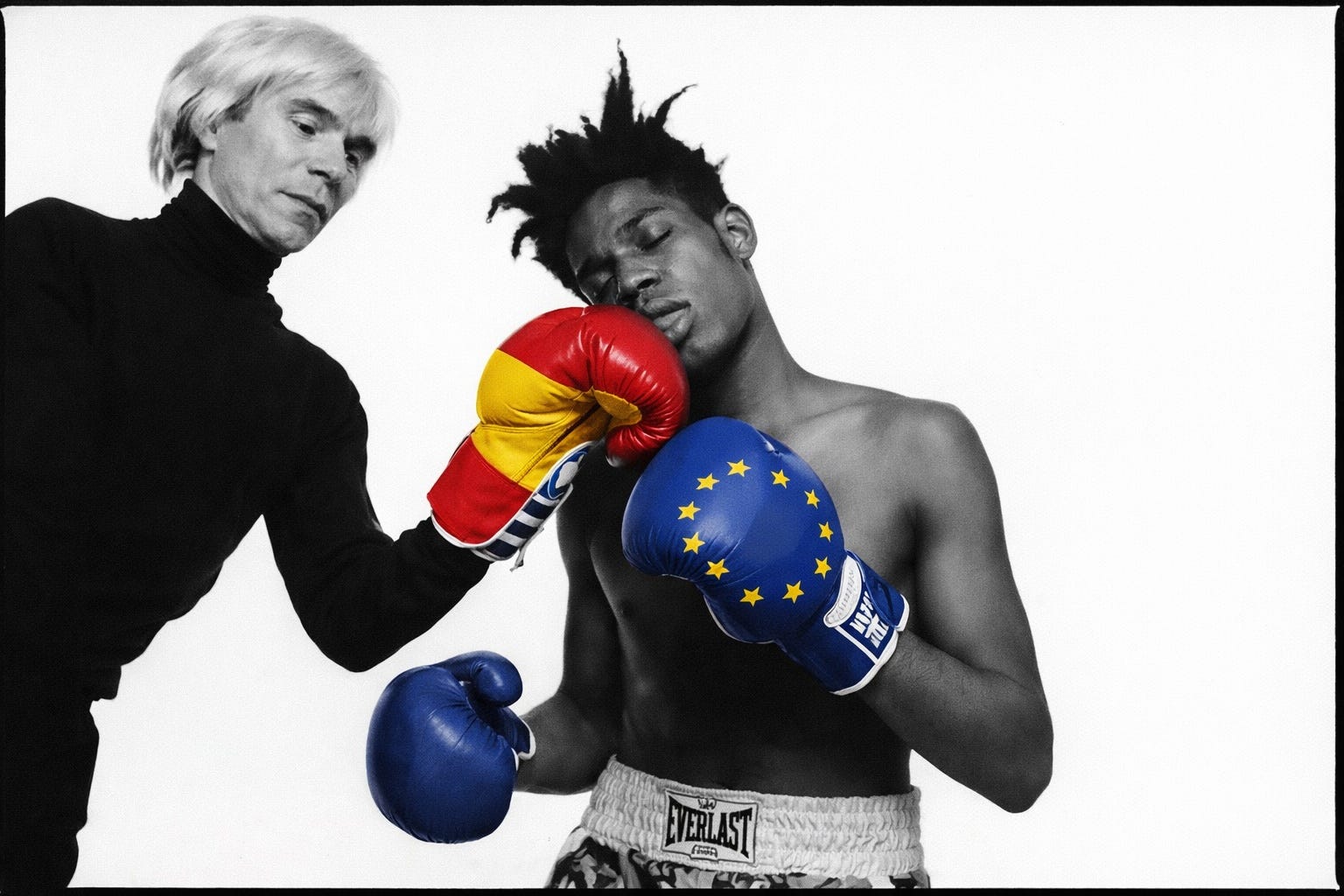
You know what they say: When you’re on the moral high ground…start shooting! Okay, fine — nobody actually says that. But politicians seem to believe it. And it certainly seems to be the rule allies of Spain’s government have followed since PM Pedro Sánchez climbed atop the Moral High Ground last week — telling the U.S. it couldn’t use Spanish airbases to hit Iran (though the ’mericans might be doing it anyway), declaring “No to war,” and getting all mano-a-mano with the Orange Menace himself 😡.
It's been Spain's Week of Beef with Europe. And honestly, it hasn’t gone badly (at least for now). Let us count the ways…
It all began on Monday. That's when Second Deputy Prime Minister Yolanda Díaz (has a job title ever sounded so much like both a promotion and an insult?) unloaded on German Chancellor Friedrich Merz for sitting silent like a scared niño in the Oval Office while Donald Trump called the Sánchez government “terrible” and threatened to cut trade ties with Spain over the airbase drama.
“What Europe needs today is leadership, not vassals who pay homage to Trump,” she said. Ouch! 🔥
Not good enough. Earlier, Merz had tried to explain that he stayed quiet to avoid “aggravating” the Orange Menace. Nobody was buying it. Foreign Minister José Luis Albares bashed him, and pro-Sánchez media labeled him a "coward.”
"Funny” moment. Merz apparently tried to call Sánchez to explain his silence. But Mr. Handsome never responded. The Moncloa later said Sánchez had simply changed his phone number. We prefer to imagine him whispering: “Talk to the hand.” ✋
And then the beef escalated. Spanish pols from one end of Iberia to another slammed European Commission President Ursula von der Leyen for declaring in a speech that Europe “can no longer be a custodian for the old world order”, which many Spaniards heard as international law is for weenies.
Díaz again. Yolanda told off Ursula, saying, “We must demand respect for international law. Anything else is barbarity. That’s why what Ursula von der Leyen just said falls short.”
“No to war, yes to international law,” said Iratxe García, the Spanish leader of the Socialists & Democrats group in the European Parliament. “You, Mrs. von der Leyen, have said Europe cannot be a custodian of the old world order. But the problem is not whether the world order is old or new, the problem is who you allow to violate this order.”
And then there was Teresa Ribera. Spain’s former deputy prime minister and now a vice-president of the European Commission, was also not thrilled with Von der Leyen’s tone: “I think that it is fair to say that maybe it was not the most adequate manner to express herself.” Ouch. Round 2.
Now, part of this may be personal. Von der Leyen has reportedly been telling people she has two big problems in Europe: Hungarian Prime Minister Viktor Orbán and Spain's Sánchez, both of whom, in her view, are being pains in the ass butt internationally in order to boost their own local electoral chances. 🤔
But hey — Spain suddenly has a new BFF. And that BFF is (wait for it) Turkey. Over the past week, Iran launched ballistic missiles toward Turkish territory, and those missiles were intercepted twice, thanks in part to Spanish support.
Spain has had a Patriot missile battery in southern Turkey since 2015 to help protect the region’s airspace. In both incidents, Spanish radar systems tracked the missiles and fed the data into NATO’s command network, helping allied defenses destroy them before they could do damage; the brains of that system sit in Torrejón de Ardoz, near Madrid.
Turkish social media has exploded with memes celebrating the unlikely alliance. Users posted Spanish and Turkish flags side by side with captions like “Brother country Spain.” Others leaned into absurdity: AI images of bald Spanish celebrities like Andrés Iniesta suddenly sporting luxurious Turkish hair transplants, accompanied by jokes like “No Spaniard will be bald ever again.” 🧑🦲
The usual frenemy. You know who still doesn’t love Spain? U.S. Republican senator Lindsey Graham, who has spent the past week publicly fuming about Madrid’s refusal to let American forces take off from the Rota and Morón bases.
There were complaints. Graham went on Fox News to argue that Washington shouldn’t keep “our air bases in a country that won’t let us use them”. Translation: if Spain won’t help bomb Iran, the U.S. should pack up its toys and go home. Waaaaah. 🙄
More news below. 👇👇
🔔 But first, check out our sponsor — Bureaucracy.es

We’ve teamed up with our friends at Bureaucracy.es to bring you more resources about immigration and life in Spain. Check out our guides on how to get a Spanish Digital Nomad Visa or Non-Lucrative Visa.
If you’d like their help with the paperwork to apply for these visas, or need someone to guide you through the Spanish citizenship application process, you can hire them using this link (and, in the spirit of full transparency with our subscribers, The Bubble will receive a small commission).
💬 Five things to discuss at dinner parties
1. 🗣️ Sánchez unveils Spain's new online hate shamer
Pedro Sánchez just unleashed the latest salvo in his war on tech bros, online hate, and people who say things he disagrees with. Yesterday he announced a new digital tool that will “systematically measure the presence, evolution and scope” of hate speech on online platforms used in Spain and publish reports naming the baddies. Oh, and its name is an acronym!
The acronym is HODIO. That stands for Huella del Odio y la Polarización — Hate and Polarization Footprint. But we feel bad that polarization is being left out, so we’re going to call it HODYPO, which is definitely more fun than just saying “hate” in Spanish with a silent H in front of it.
One more step. The announcement, made at the Cumbre contra el Odio (Antihate Summit) in Madrid, follows Sánchez’s speech last month in Dubai, where he laid out a package of five measures to regulate social media, including a ban on minors and a plan to subject tech bros executives to criminal liability if illegal or hateful content isn’t removed.
Not totally clear how it works. The HODIO tool hasn’t been released yet, but when it’s live it will apparently be used to generate a “public and transparent” ranking that will allow users to see which platforms — Instagram, TikTok, X, YouTube and Facebook will be measured — contain the most hate-inciting content, so that people know “who is blocking this content, who is looking the other way, and who is profiting from it.”
Smart people. Oh, and academics and experts will be involved to make it “rigorous.”
The trust in Sánchez issue. The interwebs, as we know, can be super-toxic these days, and we would be thrilled to face less angry garbage online. But if you think HODIO sounds eerily censorship-adjacent (like, what's "hate", and what's "disagreeable"?), you’re not alone. Some experts weren’t happy when Sánchez mentioned it in Dubai, calling it “dangerous” because it could be used to clamp down on political dissidence. And critics (largely on the right, obvi) are not happy now either.
And then there’s that EU thing. EU representatives told El Mundo last month that under the bloc’s Digital Services Act, Spain cannot impose extra obligations or criminal liability that go beyond EU law — like jailing Elon Musk for allowing hate speech to flourish. (Though it would be hilarz to see Elon in Soto de Real.)
Proof in pudding. For now, the new HODYPO tool (we’re sticking with it) is 💯 theoretical, so we can’t judge. Though it stands a better chance of coming to fruition than Sánchez’s more “vaporware” announcements — remember the 100% tax on foreign real estate buyers? — because it doesn’t require a parliamentary vote.
2. 😨 The “House of Horrors” trial begins
A trial began Tuesday that will remind us all that green and mountainous Asturias — the Spanish Ireland — is not just home to (literally) mind-blowing Cabrales cheese and gobs of cider-drinking implements. There are also weirdos. Which brings us to the Casa de los Horrores — a chalet in the village of Fitoria outside Oviedo — and the discovery in it that blew Spain’s collective mind (even more than Cabrales cheese).
The House of Horrors. The story begins in April 2025 when a suspicious neighbor alerted police that there might be, you know, kids being hidden in the house. When officers entered the chalet, they discovered three children — two eight-year-old twins and a 10-year-old sibling — who, according to prosecutors, had barely stepped outside since (drumroll, please) December 2021. 🤯
What they found inside sounds less like a family home and more like a very bleak pandemic bunker.
Gross. The kids were reportedly wearing masks and living among piles of garbage and animal waste 🤮. They slept in cribs and on a mattress without legs, wore diapers, and had shoes that hadn’t been replaced since 2019. The windows were kept closed, and air barely circulated. The kids had no schooling, no medical checkups, and almost no contact with the outside world — not even TikTok.
Extreme disease fear. When police removed the kids from the house, investigators concluded the parents — a 53-year-old German man and a 48-year-old woman with joint U.S.-German nationality — had kept them isolated out of an “insurmountable fear” of disease outbreak after contracting coronavirus. (Yes, COVID panic rides again.)
Enter the trial. The proceedings opened Tuesday at the provincial court in Oviedo — behind closed doors, given that the victims are minors and the allegations are f’ing grim. (The parents have been in preventive custody since their arrest.)
Prosecutors accuse the couple of habitual psychological abuse within the family and three counts of illegal detention, with the aggravating factor that the victims were their own children.
If convicted, the parents could face more than 25 years in prison.
And the children? The kids, meanwhile, are now under the care of the regional government of Asturias, receiving intensive psychological support and — in what must be a very strange adjustment — attending school and learning Spanish.
But the defense says: hold your horses. The parents’ lawyers claim there was no “house of horrors” at all. Instead, they say this was simply a family that chose to isolate itself from the world — perhaps in a way that was “extravagant or heterodox,” but not criminal. You know, just weirdos.
Their argument? What prosecutors describe as unlawful imprisonment, the defense describes as, um, very committed homeschooling. 🤔
3. 🤳 More beef: Spanish cinema vs. influencers

It’s the fight we didn’t know we needed (but love anyway). The Spanish film world is once again asking a question that feels both ancient and extremely 2026: why are people who don’t seem to know, like, or even vaguely follow Spanish cinema showing up at its biggest events just to flutter their eyelashes and giggle for the cameras?
The scandal exploded at the Goyas and the Málaga Film Festival, where actors, directors, and film people found themselves watching skin care and travel influencers glide down the red carpet with the serene confidence of people who know they absolutely do not need to name a single nominated film to be there.
The whole thing caught fire thanks to influencer Ona Gonfaus (1.8m followers on TikTok), who was asked on the red carpet in Málaga to recommend a Spanish film and, after buffering for a few secs, came up with “the latest Ocho apellidos movie”, a film from 2023 that is very much not the hot festival pick of the moment.
Cue the outrage. The reaction from actors and people in the film industry was not great.
Actress Yolanda Ramos (whom you may know from Paquita Salas!) noted, while cooking and doing the laundry in her pyjamas, that she was at home while influencers were at the Goyas. And the legendary Carmen Maura cut straight to the point: influencers “don’t make cinema.”
Norma Ruiz reminded everyone that the Goyas are supposed to be the party of Spanish film, not a general gala for people with ring lights. Director Isabel Coixet said that “we’ve built a world where creating something lasting matters less than accumulating followers”. and added that influencers don’t move people to cinemas so much as they move them to buy acne serums. Ouch.
The influencers, naturally, defended themselves. Their argument is simple: they bring reach, visibility, younger audiences, and free publicity to Spanish cinema.
Influence Inés Hernand took the broader view and argued that influencers are simply the new celebrities, useful for bringing fresh eyes to culture.
A matter of national concern. Even Culture Minister Ernest Urtasun tried to calm things down by saying that everyone has a place in these events (while politely reminding everyone that the invitation system is not his circus).
Plot twist not so much. And that gets us to the actual reason these people are there in the first place: the sponsors send them (because, of course).
The Spanish Film Academy has repeatedly said that the influencers at the Goyas were invited by partner brands, not by the institution itself. In Málaga, some were invited by the festival, while others also came through commercial partnerships.
So the mystery is less “why are they here?” and more “why are brands convinced that an influencer who can’t name a current Spanish film is the best ambassador for Spanish cinema?” The answer, obviously, is followers.
4.🤬 Even more beef: Politicians really need to take a chill pill
As Spain inches closer to elections (yay!), the political class appears to be entering what can only be described as the “please, everyone, calm the fuck down” phase of the pre-campaign season.
This week alone delivered a remarkable series of incidents that show that tempers are rising, patience is wearing thin, and political careers are, um, ending.
The first meltdown occurred in Collado Villalba (Madrid), where a PP councilwoman decided that a feminist monologue titled Being a Woman had crossed a line.
Happy International Women’s Day. Ten minutes into the performance, she marched onto the stage and announced the show was over because she considered it “disrespectful” (see video above, it’s unclear what triggered the interruption, but it sounds like somebody said the word “penis” 🍆 😱).
The audience, understandably confused about how a performance could be shut down like it was 1958 Francoist Spain, started protesting immediately.
The video went viral, the backlash was instant, and even the PP itself rushed to condemn the interruption, reminding everyone that freedom of expression applies to theater too. In a few hours, the councilwoman apologized, admitted her reaction “was not appropriate,” and resigned from her position.
The second episode took place in Aranjuez (Madrid) and had a bit more (literal) caffeine involved.
In a tense municipal meeting, a PSOE councilman lost his temper during an argument with a Vox representative. Insults were exchanged (“fascist,” “gilipollas,” the usual parliamentary poetry), and the socialist councilman decided the next logical step was to throw his cup of coffee at his opponent’s face.
The Vox councillor dodged it, but the scene quickly escalated into a full political scandal. Outrage followed, complaints were filed, and the PSOE councillor acknowledged his behavior had been inappropriate, so he resigned. Sad!
And just when things couldn’t get any more chaotic, there was a third political surprise. Carlo G. Angrisano, the secretary general of Nuevas Generaciones, the youth wing of the PP, suddenly announced he was quitting the party (and not quietly either).
The 29-year-old declared in a video statement that young Spaniards are fed up with immigration, bureaucracy, and “wokism,” and then did the unthinkable for someone in his position: he publicly asked people to vote for Vox instead.
The PP quickly distanced itself (like, obvi), suggesting Angrisano had already been inactive for months and implying his resignation was less dramatic than advertised. (Still, pretty dramatic, right?)
If this is just the warm-up, the election year (2027 or…2026?) promises to be a shitshow entertaining! 🎉
5.🏺 Architects recover a Roman ship off one of Mallorca’s busiest beaches
Sounds like the plot of one of the National Treasure movies (look it up, Gen Z!), but it’s not. While German tourists were peacefully cycling along the seafront at Playa de Palma (one of the busiest tourist traps beaches in Mallorca), only a few meters away, archaeologists were starting the recovery of one of the most important underwater discoveries in the Mediterranean: a Roman ship that sank more than 1,600 years ago.
The operation to recover the vessel, known as the Ses Fontanelles shipwreck, began this month, marking the start of a months-long archaeological project that experts say could transform what we know about Roman maritime trade.
“It belongs in a museum!” What makes the discovery so exciting is its astonishing state of preservation. The vessel, which dates back to the 4th century (!!), has essentially been frozen in time after being buried under a protective layer of sand that protected it from erosion and looting.
When divers examine the wooden hull, they say it still sounds solid when tapped, almost as if the ship had sunk yesterday.
Inside, archaeologists have found more than 300 amphorae, many still perfectly sealed and filled with wine, olive oil, and garum, the fermented fish sauce that Romans considered a delicacy. Even more astonishing, researchers have found vine branches used to cushion the cargo that still look freshly cut.
The location makes the story even more surreal. The ship lies just 65 meters from the shore and only about two meters underwater, directly off a beach where more than a million people swim every summer.
It was only rediscovered in 2019 by a local snorkeler, who noticed part of the structure sticking out of the sand.
The ship itself is relatively small by Roman standards (about 12m long and roughly 6m wide), with a cargo that originated in Carthago Spartaria (modern-day Cartagena) when a storm sank it.
The amphorae inside are labeled with ancient commercial inscriptions. There are also personal belongings from the crew, rope, and even a carpenter’s drill used for repairing the ship during voyages.
Divers will carefully remove the wreck piece by piece over the next four months, so it can be studied and preserved on land. The goal is to eventually exhibit the finds in Mallorca, which has a super busy history as a Mediterranean crossroads used by Phoenicians, Romans, and beyond.
🙏 Once again, please remember to share this newsletter with your friends on social media. The more we grow, the more information we’ll be able to offer each week.